The short answer
Do not tip in Japan. It is not expected in restaurants, taxis, hotels or bars, and leaving money behind usually causes confusion rather than pleasure: staff often assume you forgot it and hand it back, sometimes following you out of the door. Good service is the standard here, not an extra you buy. The price on the menu or the meter is the price you pay, and there is no line on the card machine asking you to add anything. If you want to show appreciation, say thank you properly, and pay attention to how you hand the money over, which matters far more than the amount.
The service charge on a hotel or ryokan bill
Some hotel and ryokan bills carry a service charge as a printed line, and that is the closest thing Japan has to a tip. It is not something you choose to add or leave off: it is simply part of the total you settle at checkout, already worked out and already stated. When you see it, there is nothing further to do, and no expectation that you top it up. Restaurants and taxis in Japan generally do not work this way at all. If a line on a bill puzzles you, ask at the desk and you will get a straight answer, because Japanese bills are itemised and staff are used to explaining them.
Restaurants, cafés and bars
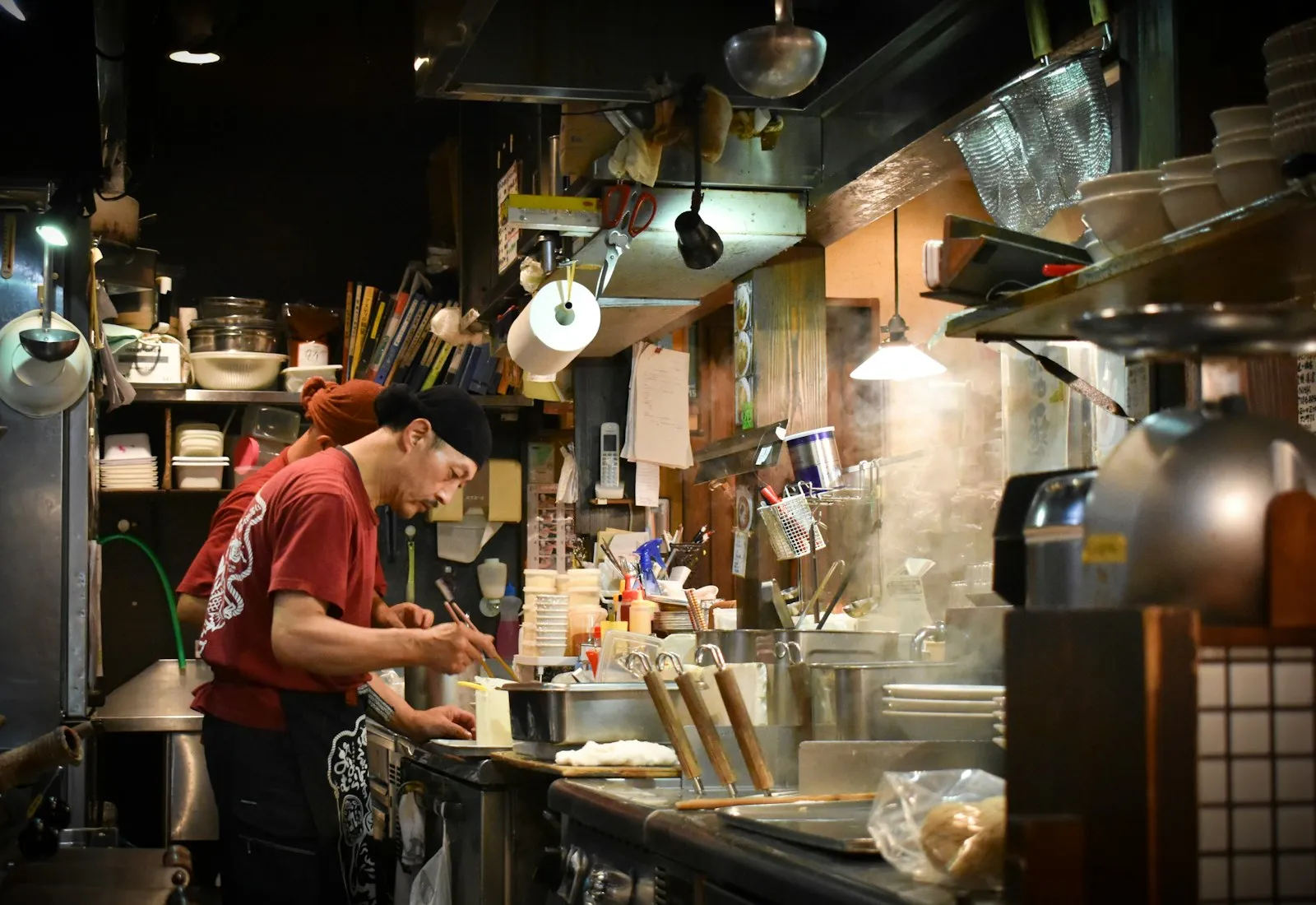
From a ticket-machine ramen counter to a kaiseki dinner, you pay what the bill says and nothing more. At many casual places you do not even pay at the table: you take the slip to the till by the door, or you bought a ticket from a machine before you sat down. Nobody is working for a tip, nobody watches the table after you leave, and a note left under a glass will usually come back to you. The warm towel, the water and the attention that come as standard are part of the price, not a service you are being upsold. Say gochisousama deshita on the way out and you have said the right thing.
Taxis, drivers and hotel staff
Taxi drivers take the metered fare and give you exact change, porters carry your bag as part of the job, and housekeeping leaves the room immaculate without any envelope from you. Japanese taxis are expensive and the doors open automatically, but the fare is the fare, and a driver handed extra will often try to return it or look genuinely uncomfortable. The same goes for guides, hairdressers and anyone else who serves you. If you have had a long day with a private driver or a guide and want to mark it, thanks and a small courtesy such as a cold drink read far better than cash.
What to do instead
Pay properly and politely, and that is the whole etiquette. At the till there is a small tray: put your notes and coins in the tray rather than into the cashier's hand, and take your change from it the same way. Carry cash, because small restaurants, shrines and rural inns still want notes. Thank people clearly, arigatou gozaimasu, and use sumimasen when you need attention. The one exception people cite is a small gift for the staff of a ryokan where you have stayed well, and even that is optional and never expected. Everywhere else, the cleanest, most respectful move is to pay the stated price and leave.