Where the money actually goes
Japan is not uniformly expensive; it is expensive in two places, long-distance transport and where you sleep. Food is not the problem, and neither is sightseeing, since shrines, parks and whole neighbourhoods cost nothing to walk through. Budgets go wrong when a week is planned as a string of shinkansen legs and hotel rooms in the two cities everyone wants, in the two months everyone wants them. Decide the route and the beds first and let the rest fall where it likes. The yen has been weak in recent years, which helps at the margins, but it does not rescue a trip built out of expensive legs.
Eating cheaply is the default, not a sacrifice
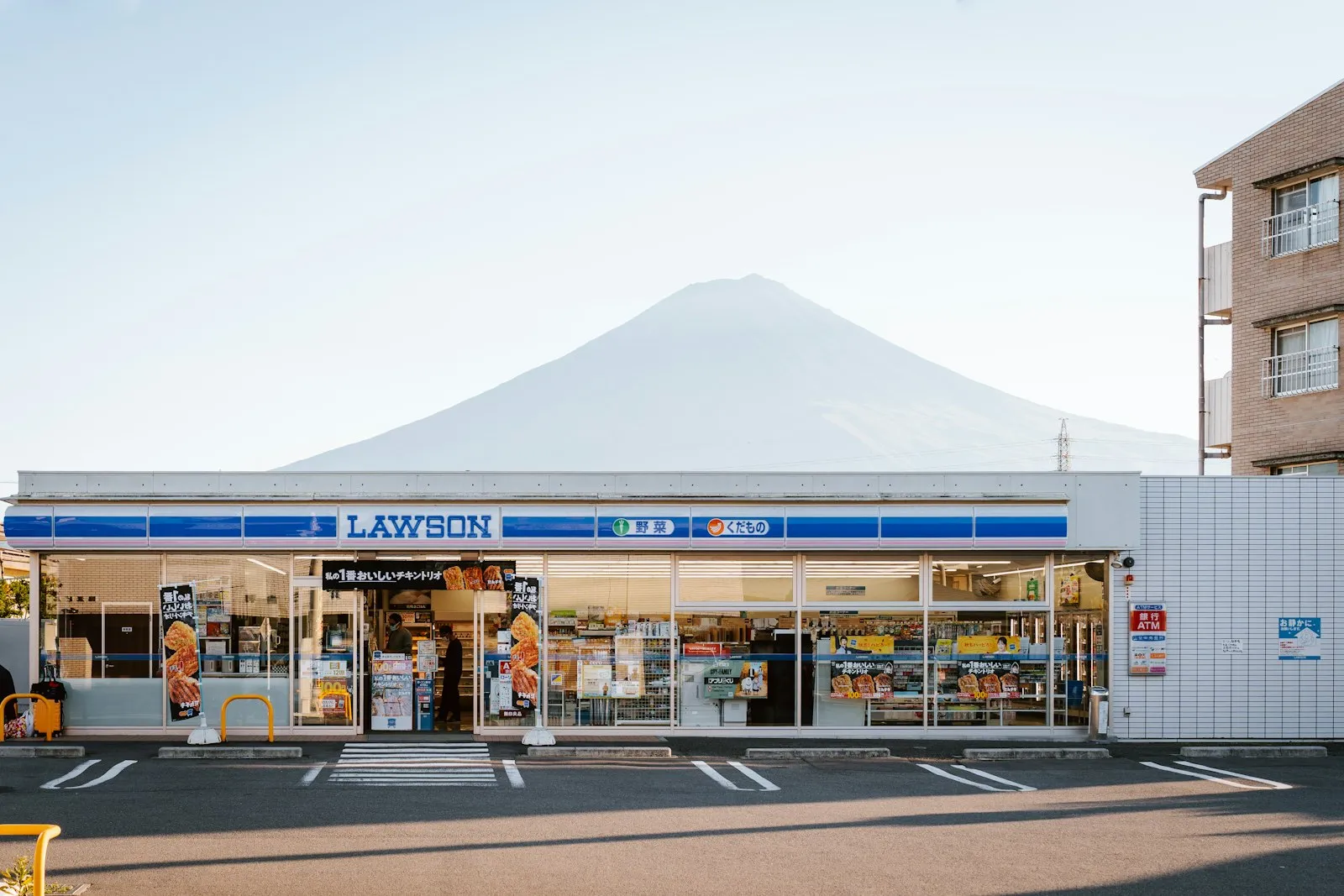
Eating cheaply in Japan is the default rather than a sacrifice. Convenience stores sell onigiri, sandwiches, hot food and cold noodles that are genuinely good, supermarkets put discount stickers on fresh food late in the evening, and standing noodle bars and ticket-machine ramen shops feed you for whatever the button says. A department store depachika is the step up and stays cheap if you buy to take away rather than sit down. There is no tipping anywhere in Japan, so nothing is added at the end, and a Suica or Pasmo card pays at konbini tills without you counting coins.
The slow option is the cheap option
The slow option is the cheap option here, and it is usually a good one. Local trains and subways on an IC card cost a fraction of a taxi, and taxis in Japan are genuinely expensive, so keep them for luggage and late nights you cannot avoid. Highway buses cover the long legs that the shinkansen covers faster, and an overnight one saves a night's bed along with the fare. The Japan Rail Pass is not automatically the frugal choice either: it comes in 7, 14 or 21 consecutive days, only works out on long itineraries, and since 1 October 2023 Nozomi and Mizuho services need a supplement. Price your real route before you buy one. If a pass does pay, buy it on the official site: from 1 October 2026 an exchange order from an overseas agent costs ¥53,000 for a 7-day Ordinary pass, against ¥50,000 online.
Where you sleep sets the price of the trip
Where you sleep sets the price of the whole trip. Business hotels and hostels are the standard cheap layer: small, clean and clustered around stations, which also saves you transport. The expensive combination is Tokyo or Kyoto in blossom season, when demand is domestic as well as foreign and the cheap rooms near stations go first. If the Kyoto rate for your dates looks wrong, price the same nights in Osaka and use the fifteen-minute shinkansen hop, since you will be day-tripping either way. Book earlier than feels necessary in the two famous months, and later if you are travelling in winter. In Kyoto, add the city's accommodation tax: since 1 March 2026 it is ¥200 per person per night on rooms under ¥6,000 and rises with the rate.
Cash, cards and the fees that eat a budget
Cash still goes a long way here, which surprises people who assumed the opposite. Small restaurants, shrines and rural inns often want it, while cards and contactless are normal in city chains. The ATMs at 7-Eleven and post offices accept some foreign cards, and the fee for a withdrawal is shown on screen before you confirm, so fewer and larger withdrawals cost less than a run of small ones. A Suica or Pasmo IC card covers trains, buses and konbini tills with one tap and keeps you out of the coin pile. Station coin lockers are the other quiet saving: they let you use the day you would otherwise lose to a hotel run.