
Osaka
Osaka is the third most populous city proper in Japan and the one that eats. It is loud, flat, quick to cross, and the easiest base in Kansai if you like your evenings long.
Osaka in a nutshell
Osaka is the third most populous city proper in Japan, the capital of Osaka Prefecture and the anchor of the Kansai region. It was the imperial capital as Naniwa in 645, and the history is still standing: Shitenno-ji, founded in 593, is the oldest Buddhist temple in the country, and Osaka Castle sits in its park in the middle of the modern city. The newest landmark is Abeno Harukas, 300 metres tall, which opened in March 2014 and was Japan's tallest building until 2022. What people actually come for is the food, and the local word for it, kuidaore, means eating until you drop.
The areas of Osaka
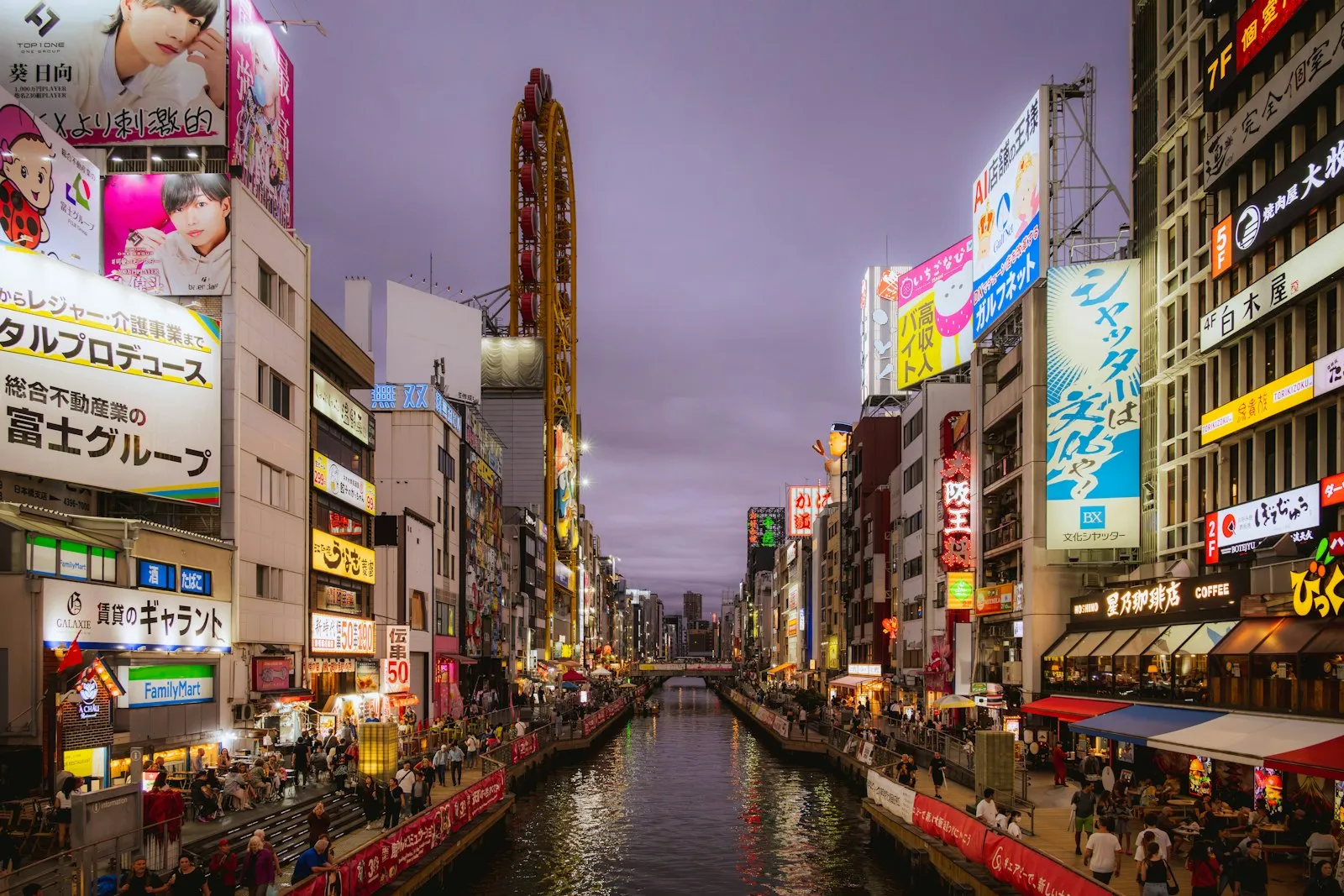
The city splits into two centres. Minami, around Namba and Dotonbori, is the one on the postcards: a canal, neon signs, and street kitchens turning out takoyaki and okonomiyaki until late. Stay here for the nights. Kita, around Umeda and Osaka Station, is the business and shopping half, better connected and quieter after dark, and the easy base if you plan to day-trip to Kyoto. Shinsekai and the Tsutenkaku tower are old-fashioned and cheap, Kuromon market does breakfast, and Osaka Castle and Universal Studios Japan sit at opposite ends of the map, both a train ride from either centre.
Getting there and getting around
Kansai International Airport sits on an artificial island in Osaka Bay, 38 km south-west of Osaka Station. It opened on 4 September 1994, handled 34.1 million passengers in 2025, and its Terminal 1 is the longest airport terminal in the world at 1.7 km, so allow time for the walking inside it. Itami, formally Osaka International, is the closer airport and mostly domestic. Trains do the rest: the shinkansen from Shin-Osaka reaches Kyoto in fifteen minutes, and the subway and loop lines cover the city. Tap in with a Suica or Pasmo IC card and forget about fares.
When to visit and staying connected
The rainy season, tsuyu, covers most of the country from early June to mid-July, and typhoons cross the islands from June to December, peaking from July to September, so late summer is the gamble. Winter is dry and clear on the Pacific side. Cherry blossom comes late March into April and the autumn colour from late October to early December, and Osaka is a good place to see both without the queues Kyoto attracts.
Goodbars sells a Japan eSIM you install at home and switch on when you land. It runs on NTT docomo, Japan's largest mobile network by mobile contracts, and our Japan coverage page shows where it reaches and what independent speed tests measure; what we can say is that you are online walking out of arrivals, which is exactly when you need to be.
Common questions
Osaka or Kyoto as a base?
Osaka for food, nightlife and value, Kyoto for temples and early mornings. They are fifteen minutes apart by shinkansen, so the choice matters less than it sounds.
Which airport should I fly into?
Kansai International if you are coming from abroad: it is 38 km south-west of Osaka Station, on its own island in the bay. Itami is closer to the city but mostly domestic.
Do I need cash in Osaka?
Some. Cash still goes a long way at small restaurants and shrines, and an IC card like Suica or Pasmo covers trains and konbini. Cards work in the bigger places.
Which network does the Goodbars Japan eSIM use in Osaka?
It runs on NTT docomo, Japan's largest mobile network by mobile contracts. Our Japan coverage page shows where it reaches and what independent speed tests measure.
On the map
Install before landingLAND ONLINE
Set up your eSIM at home and step off the plane already connected. No counter, no passport handed over, no queue.
See the plans- No ID needed
- No contract
- Instant email delivery
- Works on arrival