The railway is the road network
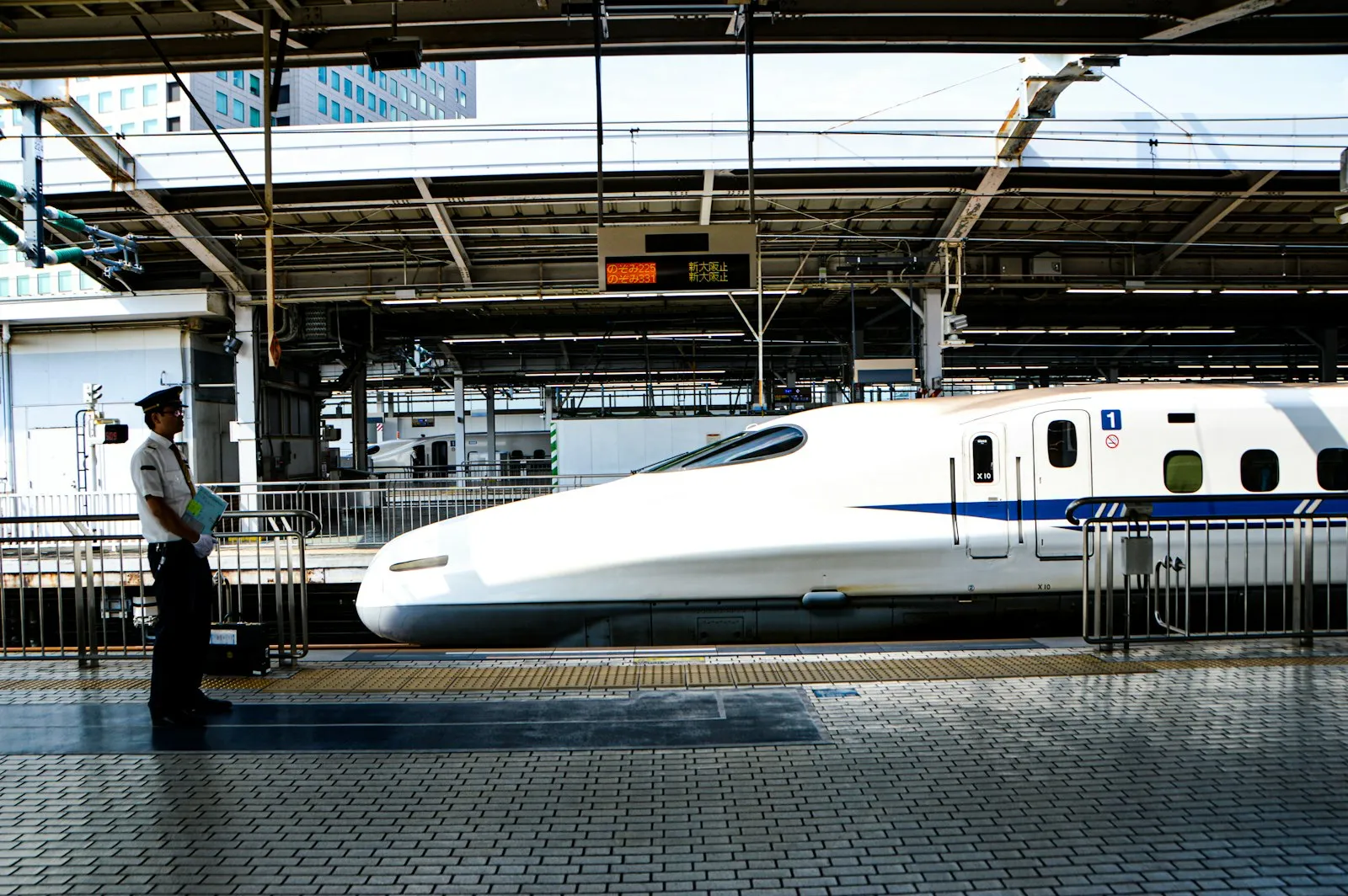
Japan runs on rails: 27,182 km of them, operated by dozens of companies and known for keeping to the minute. Some 250 shinkansen trains link the major cities over 2,951.3 km of dedicated line at 260 to 320 km/h, which is why almost nobody rents a car on a first trip. The Tōkaidō Shinkansen, opened in 1964 and 552.6 km long, is the one you will actually use: it joins Tokyo, Yokohama, Nagoya and Osaka, puts Kyoto around 2.5 hours from Tokyo, and reduces Kyoto to Osaka to fifteen minutes. Trust the timetable. A train listed for 10:14 leaves at 10:14.
Suica, Pasmo and the tap that replaces tickets
Get an IC card on day one and stop thinking about fares. Suica, launched by JR East on 18 November 2001, and Pasmo are the two names you will hear. They tap you through trains, subways and buses nationwide and also pay at convenience stores, chain restaurants and station shops. By October 2023 some 95.64 million had been issued and 1.63 million stores accepted them, which is the scale that makes one card enough for a whole trip. Suica also loads into Apple Wallet on an iPhone, which spares you the ticket machine entirely. Physical cards have had supply shortages, so the phone version is the safer plan. Short-term visitors can also get Welcome Suica or Tourist Pasmo, which need no deposit but can only be used for 28 days; the older PASMO Passport has been discontinued.
When the Japan Rail Pass pays, and when it does not
The Japan Rail Pass only works out on long itineraries, and most one-week trips are not long itineraries. It comes in 7, 14 or 21 consecutive days, and those days end at midnight rather than 24 hours after you start, so a late first activation wastes one of them. Prices rose in 2023, and since 1 October 2023 the fastest Nozomi and Mizuho services need a supplement on top of the pass, where they used to be excluded from it altogether. If you buy an exchange order before you fly, swap it for the pass within 90 days. Price the individual tickets for your real route first; on a Tokyo, Kyoto and Osaka week they usually win. Buying from an overseas agent also costs more from 1 October 2026: a 7-day Ordinary exchange order goes from ¥50,000 to ¥53,000, while the official site sells the same pass for ¥50,000.
The airports, and the trains out of them
Japan has 176 airports, but as a visitor you will meet three or four of them. Narita sits about 60 km east of Tokyo and has two trains into the city: the JR Narita Express reaches Tokyo Station in about an hour, and the Keisei Skyliner reaches Ueno in around forty minutes. Both sell tickets to foreign visitors at a discount, and both leave from the station under the terminals. Haneda is closer to central Tokyo and is the country's largest domestic airport. For Kansai, Kansai International is 38 km south-west of Osaka Station, and the Haruka limited express runs from it to Kyoto in about 1 hour 20 minutes.
Seats, taxis, luggage and staying online
Long-distance trains have reserved and non-reserved cars, and on the Tōkaidō line a large suitcase needs a reserved oversized-luggage space. Reserving costs nothing in time and beats standing in the vestibule with your bags; takkyubin services will also forward luggage between hotels overnight. In the cities you ride: the JR Yamanote loop with the Tokyo Metro and Toei subways inside it, and in Kyoto two subway lines plus a bus network that is reliably crowded. Taxis are expensive, and the rear door opens by itself, so do not pull it. Goodbars sells a Japan eSIM you install at home and switch on when you land; it runs on NTT docomo, Japan's largest mobile network by mobile contracts, and our Japan coverage page shows where it reaches and what independent speed tests measure.