Dōtonbori
On the map
Osaka's food street
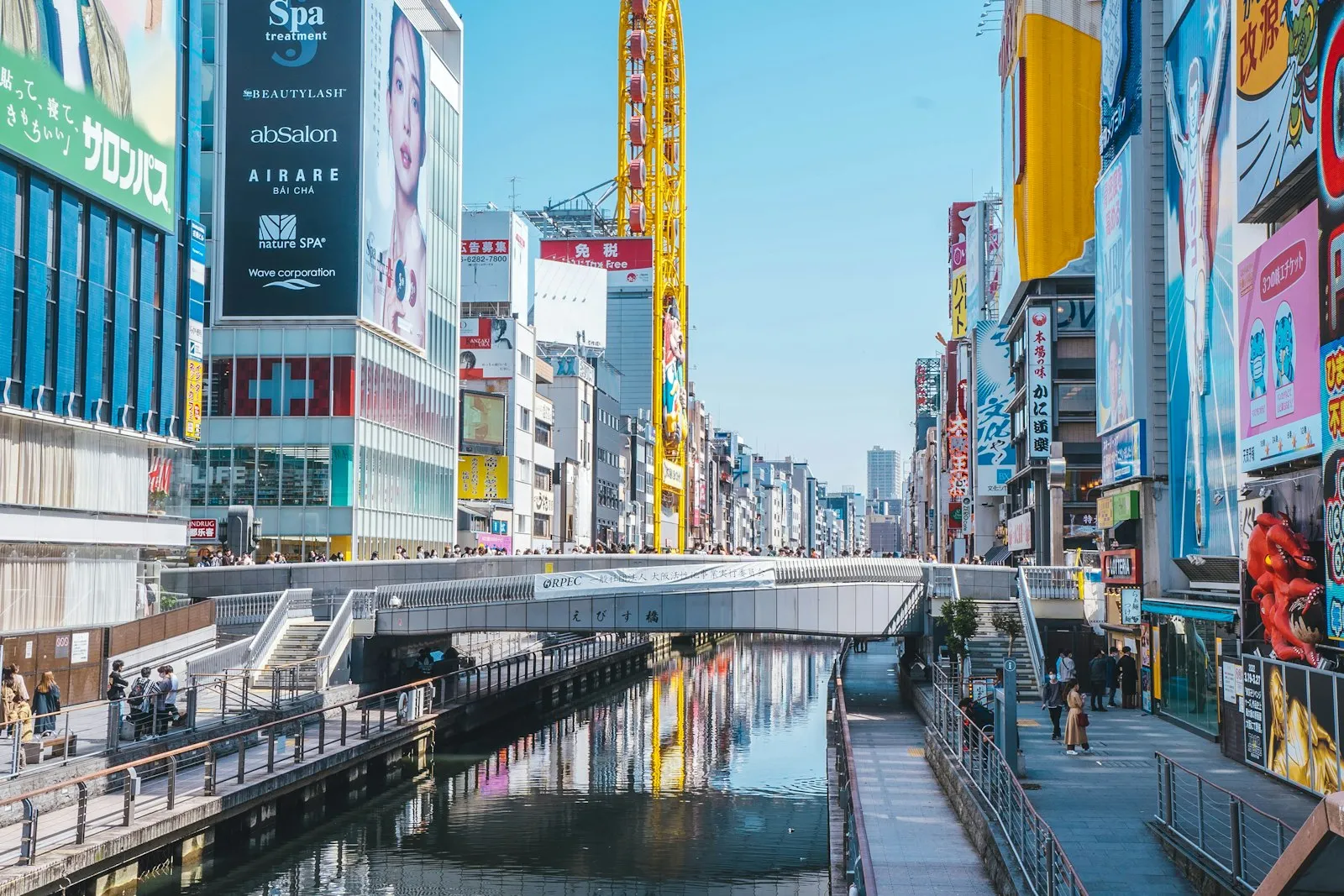
Dōtonbori is the street Osaka eats on. It runs along the Dōtonbori canal in Namba, in Chūō ward, and it is the city's main food and nightlife strip: stalls, counters and restaurants stacked behind signs that get louder the closer you look. It is not a quiet cultural stop and it does not pretend to be one. Come hungry, come in the evening when the neon is on and the canal reflects it, and accept that you will be shoulder to shoulder with everybody else who had the same idea.
The canal and the Glico sign
The canal came first. Work on it began in 1612 under Nariyasu Dōton and finished in 1615, and the street took his name. What everybody photographs now is the Glico running man, the billboard of an athlete crossing a finish line that has looked down on the water for decades. The bridge in front of it is the standing spot, and at any hour there is a row of people on it doing the same pose. It is a cliche, it is also genuinely the centre of the place, and five minutes there tells you what Osaka thinks of itself.
What to eat
Three dishes belong to Osaka and all three are sold along this canal. Takoyaki are batter balls with octopus in them, cooked in a dimpled iron plate and handed over far hotter than you expect. Okonomiyaki is the savoury pancake, cabbage and batter with whatever else, cooked on a griddle in front of you. Kushikatsu is skewered and deep fried, with a communal dip you may dip a skewer into once and only once. Eat at the counter or by the stall rather than walking with your food, and use the hot oshibori towel you are given first.
Getting there and staying connected
Namba station drops you a short walk away, and a Suica or Pasmo IC card gets you there and back: the same cards work on trains, subways and buses nationwide, and at the convenience stores you will pass on the way. Carry cash as well, because plenty of the small counters here still prefer it, and put your notes in the tray at the till rather than in the server's hand. Nobody tips, and trying to will confuse the person you are trying to thank. Goodbars sells a Japan eSIM you install at home and switch on when you land; it runs on NTT docomo, Japan's largest mobile network by mobile contracts, and our Japan coverage page shows where it reaches and what independent speed tests measure.
Common questions
What is Dōtonbori?
Osaka's main food and nightlife street, running along the Dōtonbori canal in Namba, in Chūō ward. The canal itself was begun in 1612 by Nariyasu Dōton and finished in 1615, and the street carries his name.
What should I eat in Dōtonbori?
Takoyaki, okonomiyaki and kushikatsu, the three dishes Osaka is known for, all sold along the canal. One rule worth knowing: the kushikatsu dipping sauce is shared, so a skewer goes in once and never twice.
Do I need cash, and should I tip?
Carry cash: many of the small counters here still prefer it, and money goes in the tray at the till rather than into someone's hand. Do not tip, it is not done in Japan. Cards and contactless are fine in the larger places.
Will my phone work in Dōtonbori?
This is central Osaka, so it is the straightforward end of Japan for a phone; you will want it for the translation camera on menus more than for anything else. Goodbars sells a Japan eSIM you install at home and switch on when you land; it runs on NTT docomo, Japan's largest mobile network by mobile contracts, and our Japan coverage page shows where it reaches and what independent speed tests measure.
Install before landingLAND ONLINE
Set up your eSIM at home and step off the plane already connected. No counter, no passport handed over, no queue.
See the plans- No ID needed
- No contract
- Instant email delivery
- Works on arrival