What Koyasan actually is
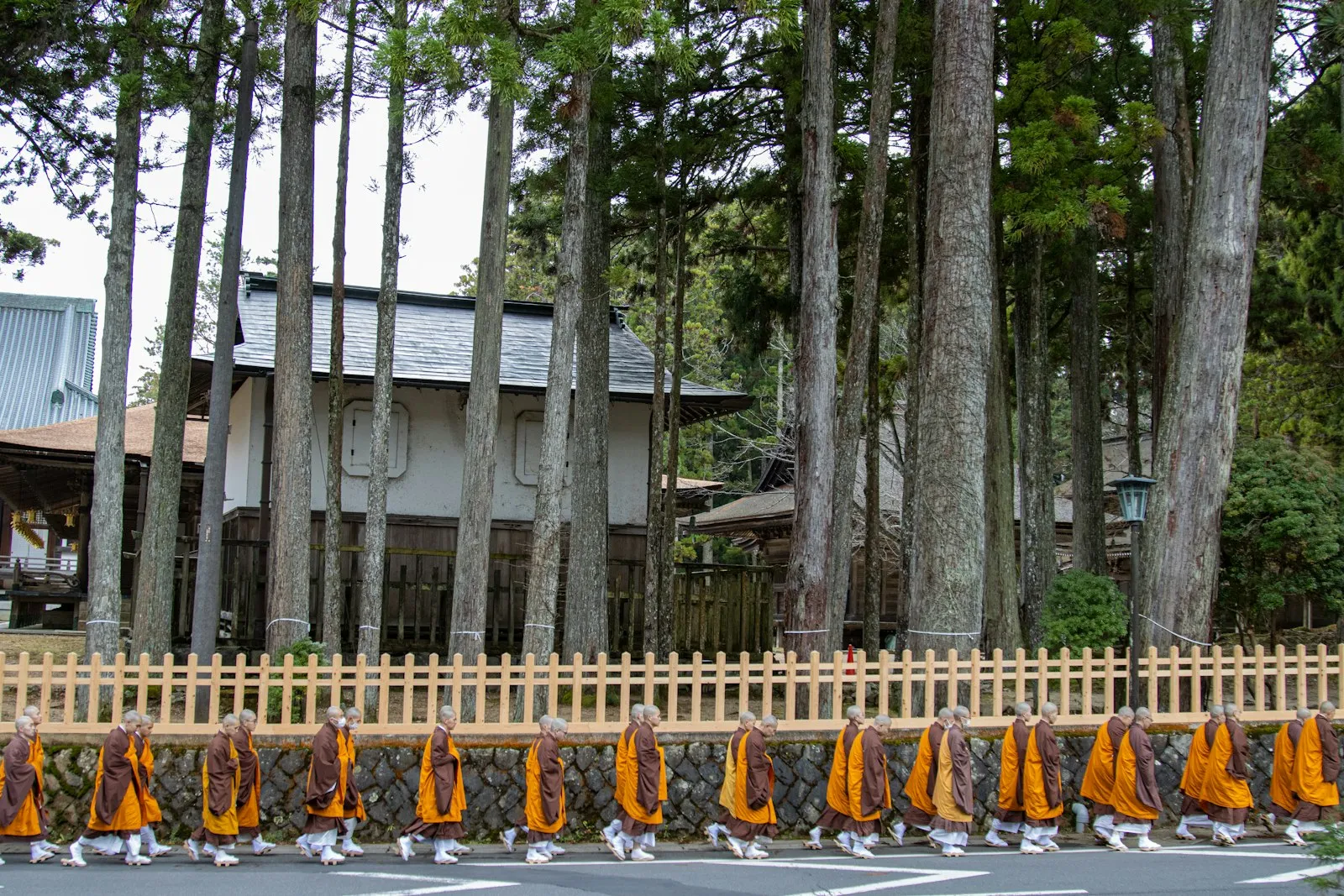
Koyasan is a large temple settlement in Wakayama Prefecture, in the mountains south of Osaka, and not a single building you visit. In the strictest sense the name is the mountain name of Kongobu-ji, the ecclesiastical headquarters of the Koyasan sect of Shingon Buddhism. There are 120 sub-temples on the mountain, many of which offer lodging to pilgrims, plus a university dedicated to religious studies, so the place runs as a working religious town rather than as a museum with a ticket gate. In 2004 UNESCO inscribed Kongobu-ji as part of the Sacred Sites and Pilgrimage Routes in the Kii Mountain Range. You come up here for a night in that town, not for a photograph from the road.
The train from Namba
The way up is the Nankai Koya Line, a private railway that connects Osaka with Koyasan. Trains run from Namba, cross the southern suburbs through Sakai, Osakasayama, Tondabayashi and Kawachinagano, then Hashimoto and Koya in Wakayama Prefecture, and end at Gokurakubashi at the foot of the mountain. The whole trip takes about 1.5 hours on an express train and about two hours on a non-express, so the difference is worth the seat reservation if one is offered. Between Hashimoto and Gokurakubashi the operator also runs the Tenku sightseeing train, daily except Wednesdays and Thursdays from March to November, and at weekends and on national holidays from December to February. Nankai is not JR, so do not assume a Japan Rail Pass covers this leg: check before you travel.
The cable car at the top
The railway stops at Gokurakubashi because the last stretch is too steep for it, and a funicular takes over. The Koyasan Cable, officially the Cable Line, is operated by the same company, Nankai Electric Railway, and it opened in 1930 as the route up to Mount Koya. You walk off the train, board the cable car and ride up to the plateau, where local buses carry on into the temple town. It is a short, steep leg, and it is the moment the trip stops feeling like a commuter run out of Osaka. Luggage is worth thinking about here: you will be moving between a train, a funicular and a bus, and then walking the last part to a temple gate, so a small bag is easier than a large case.
From Kansai Airport, and from Wakayama
You do not have to go into Osaka first. A bus runs non-stop from Kansai Airport to Mount Koya, and the adult fare is listed at 2,000 yen, which makes it the simplest option if you land in the morning and want your first night up the mountain rather than in a city hotel. From the coast there is a second bus, the Koyasan Marine Liner, which runs from Wakayamako Station to the Okunoin bus stop on Mount Koya at an adult fare of 2,250 yen. Both fares come from Wikipedia rather than from an operator page we have checked, so treat them as an order of magnitude and confirm the current price and the timetable before you build a day around either bus.
Sleeping in a sub-temple
Lodging here means a room inside a working temple, and the night runs on the temple's schedule rather than yours. Many of the 120 sub-temples take guests, in the manner of a traditional inn: tatami-matted rooms, shared bathrooms and communal baths, shoes off at the entrance, and meals served at fixed times rather than whenever you come back. The cooking is Buddhist vegetarian, so say what you cannot eat when you book rather than at the table. Keep your voice down in the corridors, take your rubbish with you, and ask at check-in about the morning service and what time the gates are locked. There is no tipping anywhere in Japan, temples included.
Overnight or day trip, and signal up there
A day trip is possible and a night is the point. About 1.5 hours each way by express, plus the cable car and a bus at the top, leaves you a few useful hours on the mountain and a rushed return; the temple town changes once the last trains have gone and the day visitors with them. If you can only manage a day, take the earliest express you can and check the last departure down before you settle anywhere.
On signal, be realistic. Our carrier's own service notes say mountains, tunnels and remote areas still have gaps, and we have no published coverage statement for Koyasan itself, so download your maps, your timetables and your temple's address before you leave Osaka. Goodbars sells a Japan eSIM you install at home and switch on when you land; it runs on NTT docomo, Japan's largest mobile network by mobile contracts, and our Japan coverage page shows where it reaches and what independent speed tests measure.