Two centres, and your bedtime picks one
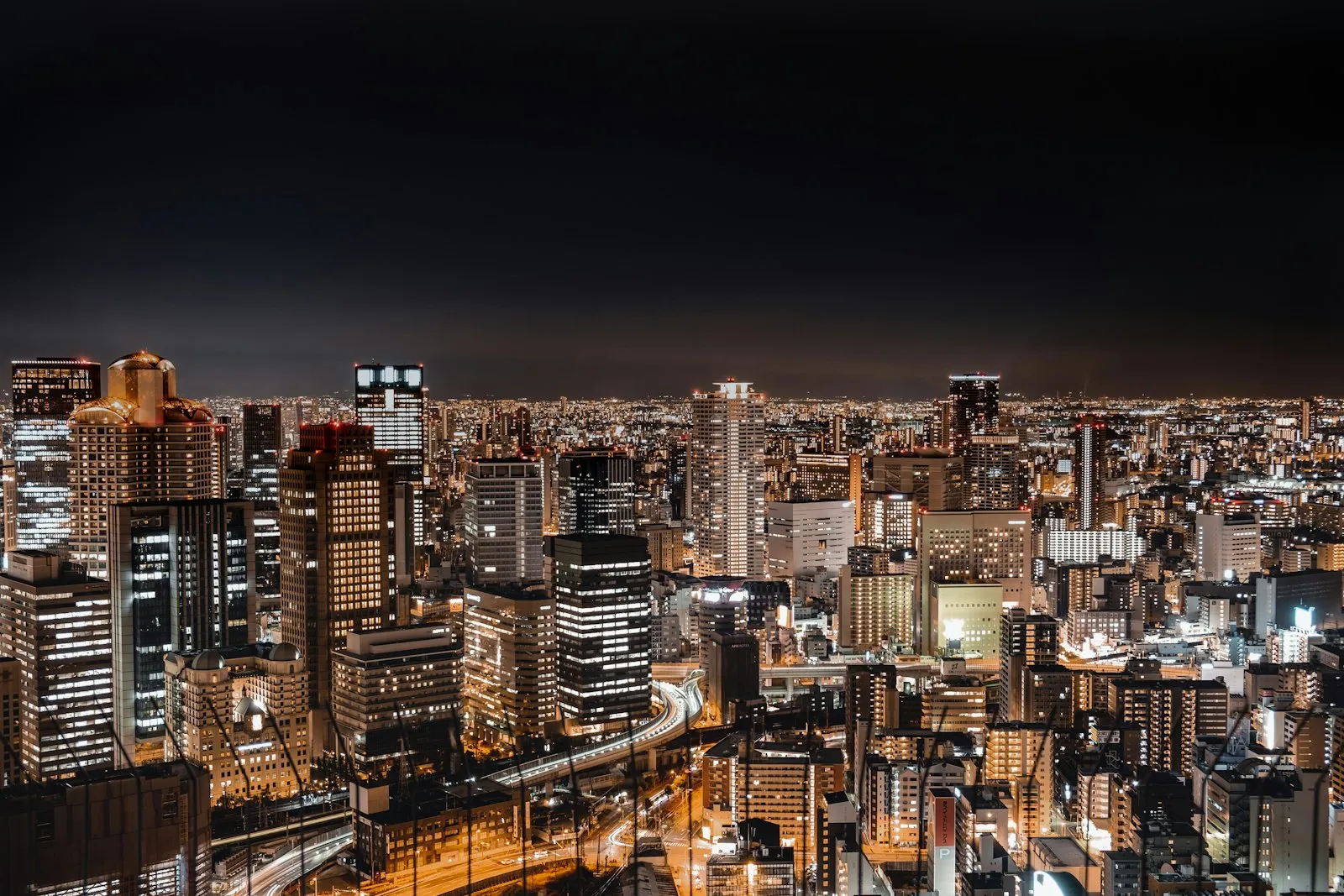
Osaka splits into Minami and Kita, and the split is the whole decision. Minami, around Namba and Dotonbori, is the canal, the neon and the street kitchens, and it runs late. Kita, around Umeda and Osaka Station, is the business and shopping half, better connected and quieter after dark. Everything else is a variation on those two: Shin-Osaka for the shinkansen, Tennoji for value. The city is the third most populous in Japan and the anchor of Kansai, so wherever you land you are on the subway and the loop line with a Suica or Pasmo IC card. We have not checked whether Osaka charges a local accommodation tax of its own, so ask whether your quote includes one.
Namba and Dotonbori: stay here for the nights
Dotonbori is a street along a canal in Namba, in Chuo ward; Nariyasu Doton began digging the canal in 1612 and it was finished in 1615, and the running-man billboard has been the city's postcard ever since. Sleeping here means the food and the bars are downstairs, the walk home is five minutes, and you will hear some of it through the window. It suits short trips, late eaters and anyone who came for the city rather than for Kansai. The Foreign Office advice for Japanese nightlife applies in any busy district: see a menu with prices before you go in, do not follow touts inside, and keep an eye on your drink.
Kita and Umeda: the base for Kansai
Kita is the half of the city that works for a living: Osaka Station, the department stores above and around it, and the offices behind. It is quieter after dark and it is the easy base if you plan to day-trip, because Kyoto is fifteen minutes away and Kobe and Nara start from here too. Rooms are business rooms and the evening is what you make of it, which is either the drawback or the point. The JR Kansai-Airport Rapid runs direct from the airport to Umeda, so an arrival day is simple. docomo's 5G standalone spot list of 31 May 2026 names the platform area of JR Osaka Station.
Shin-Osaka: the single shinkansen night
Shin-Osaka is the shinkansen station, not a neighbourhood anyone visits for itself. There is one good reason to sleep there and it is a real one: you are arriving late and leaving on an early train, or you are doing Hiroshima and Tokyo on consecutive days and the walk to the platform is worth more to you than dinner. Kyoto is fifteen minutes away from here. If you stay longer than a night you will spend the difference on subway rides back into the city. The Haruka runs in from Kansai International, and docomo's 5G standalone list names the second-floor concourse of the station.
Tennoji and the south: the value end
Tennoji sits south of Namba and it is where the arithmetic changes. The airport trains stop here first: the Haruka limited express charges ¥1,300 to Tennoji on its discounted one-way ticket for visitors, against ¥1,800 to Osaka or Shin-Osaka, and the JR Kansai-Airport Rapid also runs direct. You are on the loop line, a few minutes from Namba, and the streets around Shinsekai and the Tsutenkaku tower are old-fashioned and cheap to eat in. Take it if you are staying several nights, if you are travelling with a group, or if a short train ride is a fair price for a room you can afford.
Getting in from Kansai, and staying online
Book the room, then check how you reach it. Kansai International sits 38 km south-west of Osaka Station on an artificial island and was the first airport in Japan to run 24 hours, which takes the fear out of a late flight. The JR West Haruka limited express sells a discounted one-way ticket to foreign passport holders entering as temporary visitors, ¥1,800 to Osaka or Shin-Osaka, ¥1,300 to Tennoji, ¥2,000 to Kobe and ¥2,200 to Kyoto, and it cannot be bought once you are in Japan. The Kansai-Airport Rapid is the slower alternative, direct to Umeda and Tennoji.
Goodbars sells a Japan eSIM you install at home and switch on when you land; it runs on NTT docomo, Japan's largest mobile network by mobile contracts, and our Japan coverage page shows where it reaches and what independent speed tests measure. Whatever connection your room has stops at the door, and the point of a base in Osaka is the trains you take out of it.