The city plans itself around dinner
Osaka has a word for its own appetite: kuidaore, eating until you drop. The third most populous city proper in Japan splits into two centres and the split does your planning for you. Minami, around Namba and Dotonbori, is the canal, the neon and the street kitchens, and it runs late. Kita, around Umeda and Osaka Station, is the business and shopping half, better connected and quieter after dark. Two days fit comfortably: give day one to the south and the water, day two to the castle and the north, and keep a half day spare for Kobe or Nara. A Suica or Pasmo IC card taps you through the subway and the loop line, and cash still matters at small counters.
Day one, afternoon: Namba and the Dotonbori canal
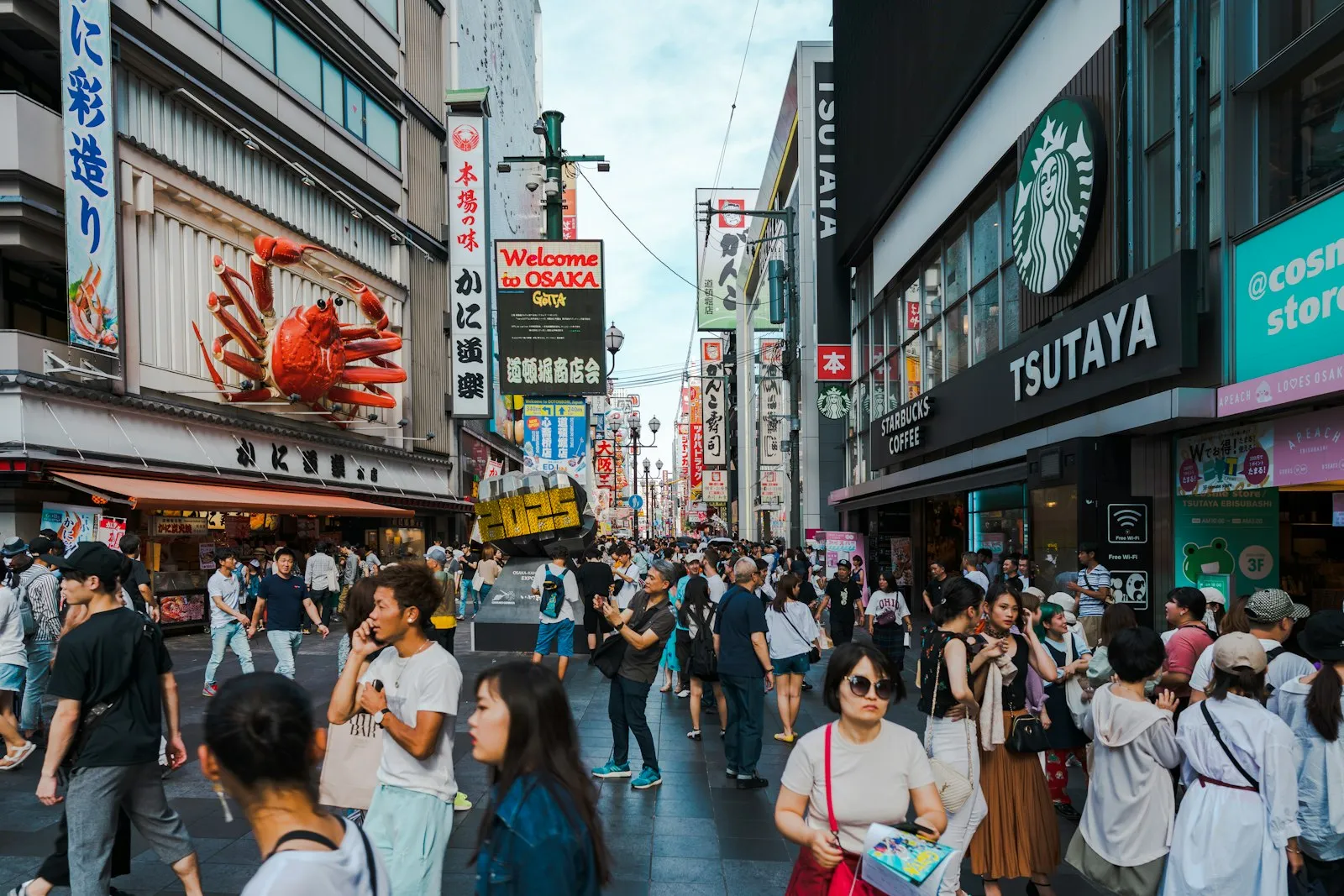
Dotonbori is a street along a canal in Namba, in Chuo ward, and the canal came first: Nariyasu Doton began digging it in 1612 and it was finished in 1615. The running-man billboard on the water is the photograph, and the crowd that takes it is part of the experience. What you are here for is the eating: takoyaki, okonomiyaki, kushikatsu, cooked in front of you and handed over hot. Start in the covered arcades around Namba in the afternoon, walk to the water as the signs come on, and let the queue lengths pick your dinner. Kuromon Ichiba, the covered market a short walk away, is the morning version of the same idea.
Day one, late: the rules of a long night
Minami keeps going, and a few habits keep the night simple. At a kushikatsu counter the sauce pot is shared, so a skewer goes in once and never again. Tipping is not done anywhere in Japan, so take your change from the tray and go. The UK Foreign Office advice for nightlife in Japan is worth carrying: see a menu with prices before you go into a bar, do not follow touts inside on the promise of a free drink or a look around, and do not accept drinks from strangers or leave yours unattended. Doyamacho is the known LGBT+ district of the city. Drinking in public is generally legal, with local exceptions on certain days, and street smoking is restricted to marked areas in some cities.
Day two, morning: Osaka Castle and the park around it
Osaka Castle stands in Chuo ward, in its own park in the middle of the modern city, and it earned its place in the national story: Toyotomi Hideyoshi began building it in 1583, on the site of the Ishiyama Hongan-ji temple of the Ikko-ikki, and the castle played a major part in the unification of Japan in the sixteenth century. Go early, walk the moats and the stone walls first and the keep second, and give the park itself the time it deserves; it is where the city comes out in blossom season. We could not verify an entry price for the keep, so carry cash and check at the gate. From there the subway runs north to Kita for the afternoon.
Day two, half day out: Kobe or Nara
If two days in one city is one day too many for you, Kansai hands you two half days. Kobe is about 35 km west of Osaka, Japan's seventh-largest city and its third-largest port city, with a shrine, Ikuta, whose founding is described in the Nihon Shoki as the year 201; the 1995 Great Hanshin earthquake is part of its recent history and the city rebuilt around it. Nara is the other direction and the older one: the capital from 710 to 784, with eight temples, shrines and heritage sites inscribed together by UNESCO in December 1998, and a park from 1880 where more than 1,200 wild sika deer are protected as a natural treasure. Check both routes in a transit app before you commit the afternoon.
Landing late at Kansai, and staying online
Kansai International runs 24 hours, the first airport in Japan to do so, which is why a late flight into Osaka is less painful than a late flight into Tokyo. It sits 38 km south-west of Osaka Station on an artificial island. The JR West Haruka limited express runs into the city, and its discounted one-way ticket for visitors, ¥1,800 to Osaka or Shin-Osaka and ¥1,300 to Tennoji, needs a foreign passport and an entry as a temporary visitor, and cannot be bought once you are in Japan. The JR Kansai-Airport Rapid service also runs direct to Umeda and Tennoji.
Goodbars sells a Japan eSIM you install at home and switch on when you land; it runs on NTT docomo, Japan's largest mobile network by mobile contracts, and our Japan coverage page shows where it reaches and what independent speed tests measure. docomo's 5G standalone spot list of 31 May 2026 names the platform area of JR Osaka Station and the second-floor concourse at Shin-Osaka; its only published figure for the airport is from the 2020 spot list, so plan on LTE there.