What a night out actually looks like
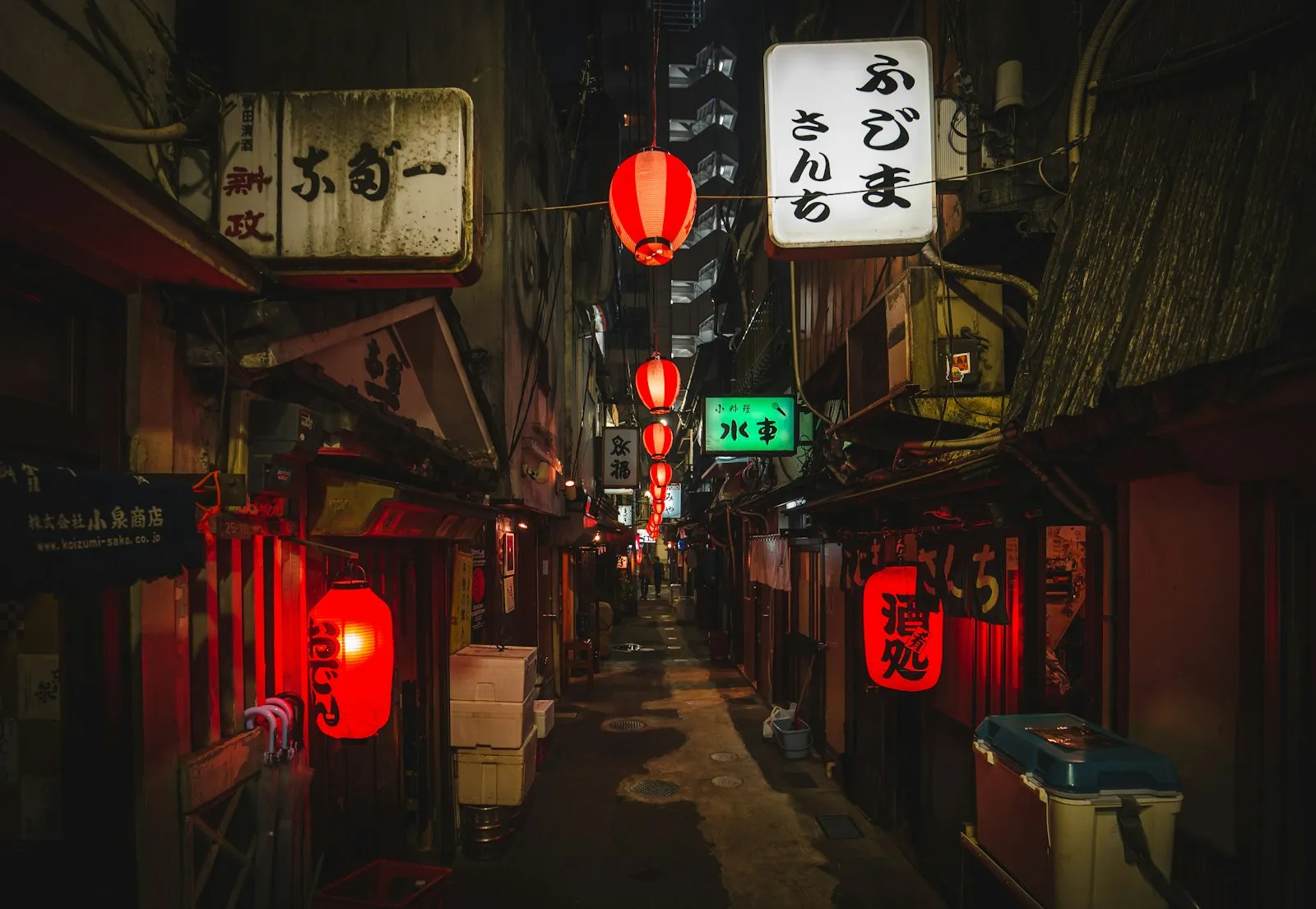
The Japanese night is built around small rooms, not big venues. It usually starts at an izakaya, where you order in rounds and the food keeps coming with the drinks, and then moves to a second and sometimes a third bar, each holding a handful of people. Standing bars near stations do the quick version. Many izakaya add a small seating charge with a dish you did not order; it is normal, not a scam, and the menu says so, so read it. There is no tipping anywhere. The volume stays low by European standards, and the person who gets loud is the one everybody notices.
Shinjuku: Golden Gai and Kabukicho
Golden Gai is a district of Kabukicho made of six narrow alleys joined by passages wide enough for one person, with more than 200 tiny shanty-style bars, clubs and eateries packed into it. Most do not open until nine or ten in the evening, so the lanes are dead at dinner time and full at midnight. Two things to know: the alleys are private roads, and photography and video on the street are prohibited without permission from the area's business promotion association. Many bars seat six or eight and charge for the seat, and some prefer regulars. Kabukicho around it is the loud, neon half, and it is also where the touts stand.
Roppongi, Shibuya and Ikebukuro
Roppongi, in Minato ward, is the district built for going out late, with embassies around it and the Roppongi Hills complex at its centre, and it is the one that draws the most foreign visitors. It is also the one with the record: a run of drink-spiking incidents in 2009 and 2010, in which customers reported being drugged and robbed, was traced to bars here. Shibuya is younger and louder, scattered around the scramble crossing, and Ikebukuro is the northern equivalent. The UK FCDO lists Kabukicho, Roppongi, Shibuya and Ikebukuro together as the police's high-risk zones at night. That does not mean stay away; it means arrive on purpose, not behind someone who found you on the street.
Dotonbori, and Kyoto after dark
Osaka does the other version. Dotonbori is the city's main nightlife and food street, running along the canal in Namba, Chuo ward; the canal itself was begun in 1612 by Nariyasu Doton and finished in 1615, and the Glico running-man billboard is the thing everyone photographs from the bridge. Takoyaki, okonomiyaki and kushikatsu are the street food, and the eating and the drinking are the same activity here. Kyoto is the quiet counterweight: Gion and the lanes of the eastern hills empty early, the bars downtown near Nishiki market stay open, and the city's pleasure at night is a walk rather than a venue.
The rules that catch people out
Smoking on the street is illegal in Tokyo and some other cities: you smoke in the marked areas, not walking along with a cigarette. Drinking in public is generally legal, with local exceptions including New Year's Eve bans in some areas. Loud, boisterous behaviour draws negative attention faster than anything else you can do, and that includes the train home. On drugs the country has zero tolerance: a positive test means charges even if you did not consent to taking anything, refusing a test can mean arrest, and sentences include prison labour. Check the last departure on your line before the evening starts, because after it there is no real night network.
Touts, spiked drinks and the bill
This is the part the police actually warn about. Most British victims in Tokyo were approached by English-speaking street touts, kyakuhiki, in Kabukicho, and the pattern is drink spiking followed by card fraud: people wake with no memory and large sums billed to their card. Never follow a tout into a bar. Ask to see a menu with prices before you go in, and walk if there is not one; disputes over inflated bar bills have ended in arrests. Keep your drink with you and do not accept one you did not watch arrive.
Goodbars sells a Japan eSIM you install at home and switch on when you land; it runs on NTT docomo, Japan's largest mobile network by mobile contracts, and our Japan coverage page shows where it reaches and what independent speed tests measure.