
Fukuoka
Fukuoka, on Hakata Bay, is the largest city on Kyushu and the part of Japan’s main islands closest to the Asian mainland, a trading port since ancient times with its own dialect, its own festivals and the remains of a 13th-century stone wall along its bay.
Fukuoka in a nutshell
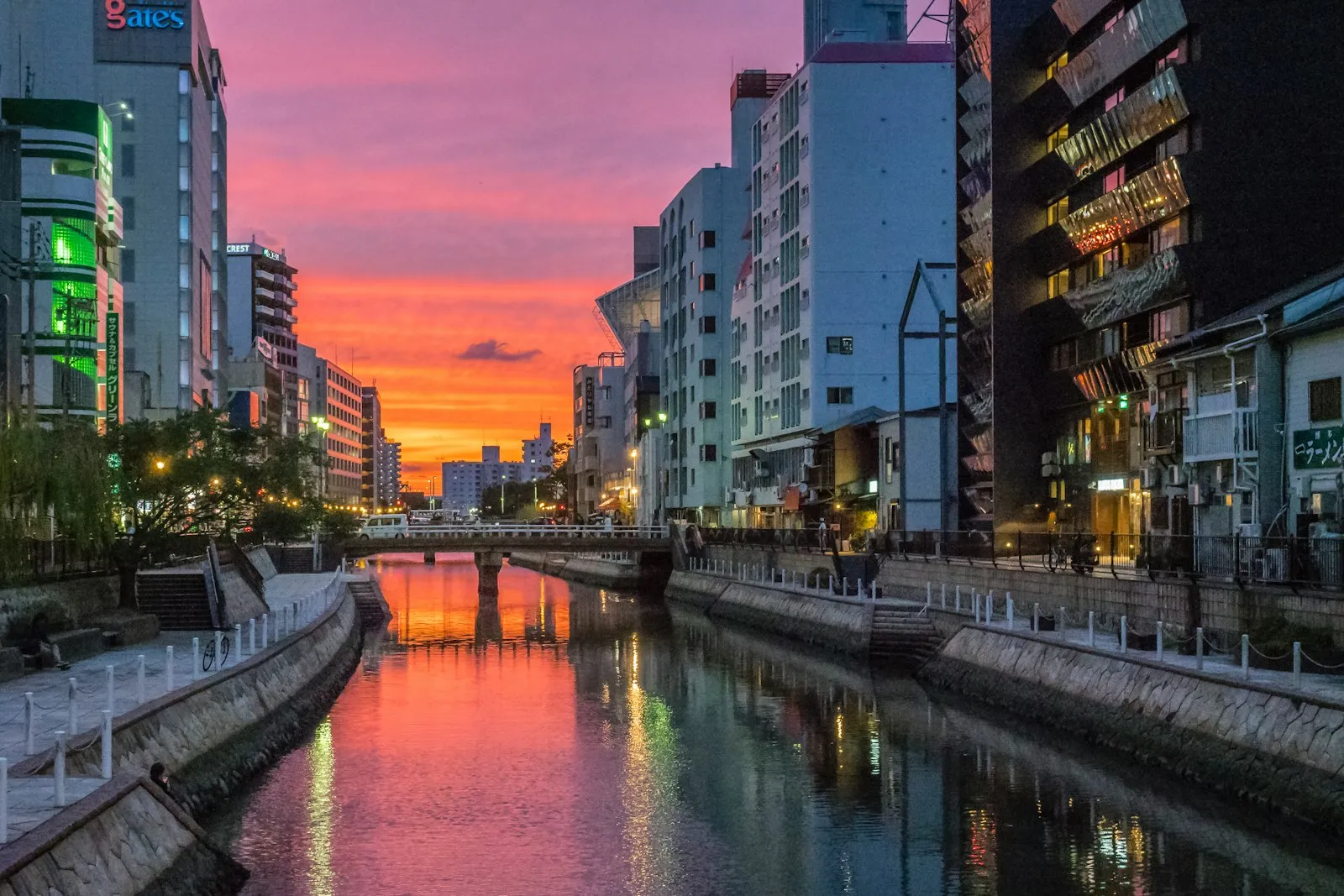
Fukuoka is the capital of Fukuoka Prefecture and the most populous city on Kyushu, the largest city west of the Osaka, Kobe and Kyoto area, with around 2.5 million people in the greater area at the 2005 census. It is built along the shore of Hakata Bay and has traded with the Asian mainland since ancient times, because this is the point of Japan’s main islands closest to it: Busan in South Korea is about 180 km away, Tokyo about 1,100 km. That distance from the old capitals gave Fukuoka its own dialect and culture, and it shows in the festivals.
Hakata, the bay and its history
The name Hakata runs through the city, from the bay to the two big festivals: Hakata Gion Yamakasa, the most famous, traced back to 1241, when Enni, founder of Jōten-ji temple, was carried through the town to pray away a plague, and Hakata Dontaku in Golden Week. After the Mongol invasion attempt of 1274, samurai built a stone wall 20 km long along Hakata Bay between 1276 and 1277. Dazaifu, 15 km south, is as far as the invaders got. The wall stood 2 to 3 metres high and was excavated in the 1930s.
Getting there and getting around
Fukuoka is about 1,100 km from Tokyo, so check the route and the options in a transit app before you book. On a Japan Rail Pass, Nozomi and Mizuho services have needed a supplement since 1 October 2023, so check which train you are booking. The city’s subway includes the Nanakuma line, opened in 2005, and a Suica or Pasmo IC card pays for trains and buses here as it does everywhere. Cards are common in the centre, but keep cash for small restaurants and shrines, where it is simpler.
When to visit and staying connected
Fukuoka is mild, with an annual average of 16.3°C, average humidity of 70% and 1,811 hours of sunshine a year. The rainy season runs early June to mid-July and typhoons come from June to December, peaking from July to September, so keep those weeks flexible. Hakata Dontaku fills the streets in Golden Week, when trains and hotels across the country are at their fullest.
Goodbars sells a Japan eSIM you install at home and switch on when you land; it runs on NTT docomo, Japan's largest mobile network by mobile contracts, and our Japan coverage page shows where it reaches and what independent speed tests measure. Renting a pocket Wi-Fi is a long-standing habit for visitors to Japan too, and it suits a group that moves together all day.
Common questions
How far is Fukuoka from Tokyo?
About 1,100 km, so check the route and the options in a transit app before you book. On a Japan Rail Pass, Nozomi and Mizuho trains have needed a supplement since 1 October 2023.
What is Fukuoka known for?
Its festivals, above all Hakata Gion Yamakasa, which traces back to 1241, the stone wall samurai built along Hakata Bay after 1274, and its long history as Japan’s door to the Asian mainland: Busan in South Korea is only about 180 km away.
Is Fukuoka a good base for Kyushu?
Yes. It is the most populous city on Kyushu, Dazaifu is 15 km to the south; for longer trips, check the route in a transit app.
Which network does the Goodbars Japan eSIM use in Fukuoka?
We have not published that yet. Goodbars sells a Japan eSIM you install at home and switch on when you land; it runs on NTT docomo, Japan's largest mobile network by mobile contracts, and our Japan coverage page shows where it reaches and what independent speed tests measure.
On the map
Install before landingLAND ONLINE
Set up your eSIM at home and step off the plane already connected. No counter, no passport handed over, no queue.
See the plans- No ID needed
- No contract
- Instant email delivery
- Works on arrival