How the Japanese calendar is built
Japan has 16 recognised public holidays, set by the Public Holiday Law of 1948 and amended eleven times since, most recently in 2018. Two rules in that law matter to a visitor. If a national holiday falls on a Sunday, the next working day becomes a holiday too, known as furikae kyujitsu. And any day sandwiched between two national holidays also becomes a holiday, known as kokumin no kyujitsu. On top of that, most companies voluntarily close from 29 December to 3 January, and some from Christmas Eve to 5 January, which is not an official holiday but empties offices and fills trains all the same.
Golden Week, the week the country moves
Golden Week runs from 29 April to 5 May and is one of the largest holiday periods of the year. Four of those days are officially public holidays, and workers often take the whole week, so domestic travel surges and prices and availability both suffer. If your trip overlaps, book transport and beds months ahead rather than weeks. The upside is that a lot of festivals run inside it: Hakata Dontaku, the Hamamatsu Kite Festival and the Hiroshima Flower Festival, which is held from 3 to 5 May in the Peace Memorial Park and along Peace Boulevard. If you want a festival without the travel chaos, pick one you can reach on foot from where you are already staying.
Gion Matsuri, the one to plan a July around
The Gion Festival takes over central Kyoto for the whole of July and is one of the largest festivals in Japan. It is a Shinto festival of the Yasaka Shrine in the Gion district, and it began in 869, when Emperor Seiwa ordered prayers during a plague; it became annual by the year 1000 and has seldom missed a year since. The part everyone comes for is the Yamaboko Junko, the two processions of floats on 17 and 24 July. The three evenings before each procession are called yoiyama, when downtown closes to traffic, old houses open their entryways to show family heirlooms in the Byobu Matsuri custom, and the streets fill with food stalls.
Obon, and why the date depends on where you are
Obon is the festival that honours ancestral spirits, and it is the clearest case of a Japanese date that moves. It has been observed for more than 500 years, lasts three days, and traditionally includes the Bon Odori dance. Families return to their home towns and clean the graves, which is why the whole transport network is full. Traditionally it fell on the fifteenth day of the seventh lunar month; when Japan switched to the Gregorian calendar in the Meiji era, different regions responded differently, so there are now several Obon periods. Tokyo and some urban parts of Tohoku and Hokuriku observe it on 15 July, while the mid-August observance is the one that fills trains nationally. Check the region you will be in.
Blossom, leaves and the New Year
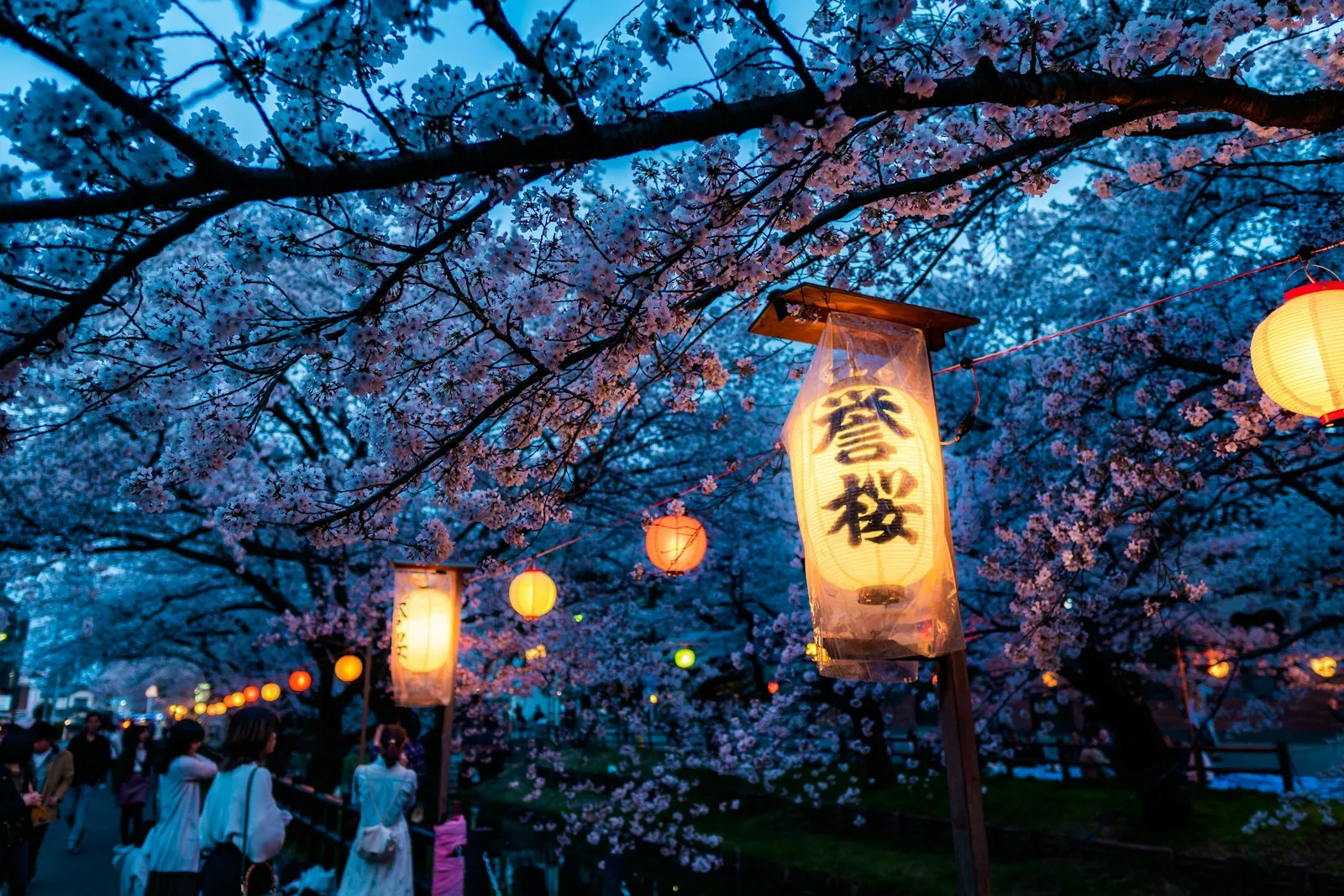
Two of Japan's biggest seasonal events have no fixed date at all. Cherry blossom runs from mid-March into April, earlier in the south and later in the north, and the exact peak depends on the year's weather, so any date you read is an estimate. Autumn colour arrives from late October to early December and is a little more predictable. Kyoto is where everybody wants both, so book early and start at dawn. New Year is the third crowd: trains and hotels fill, most companies close from 29 December to 3 January, and shrines take their biggest visits of the year. Meiji Jingu in Tokyo holds a yokozuna ring-entering ceremony in January, usually around the 5th to the 7th, and again at its autumn festival.
Travelling during a festival without regretting it
The rule is simple: book earlier than feels necessary, and move less. Golden Week, Obon and the New Year period fill trains and hotels nationwide, and reserved seats disappear first. Pick one base and make day trips instead of hauling luggage through packed stations, or use hotel to hotel luggage forwarding. At the festival itself, streets close to traffic, so plan on walking further than you expect. Public drinking is generally legal with local exceptions, including New Year's Eve bans in some areas, and smoking on the street is illegal in Tokyo and other cities outside designated areas. Goodbars sells a Japan eSIM you install at home and switch on when you land; it runs on NTT docomo, Japan's largest mobile network by mobile contracts, and our Japan coverage page shows where it reaches and what independent speed tests measure.