Four seasons, and three climates
Japan is long enough to hold three climates, so the question is really when to go where. Most of Honshu, Shikoku and Kyushu, which is where the famous cities sit, is humid subtropical with four distinct seasons: a mild spring, a hot and wet summer, a clear autumn and a dry winter. Hokkaido in the north is humid continental, with long, very cold winters and the heavy snow Sapporo is known for. The Ryukyu islands in the south, Okinawa among them, run subtropical to tropical. A trip built on Tokyo, Kyoto and Osaka follows the first of those three, and that is the calendar below.
Blossom in spring, colour in autumn
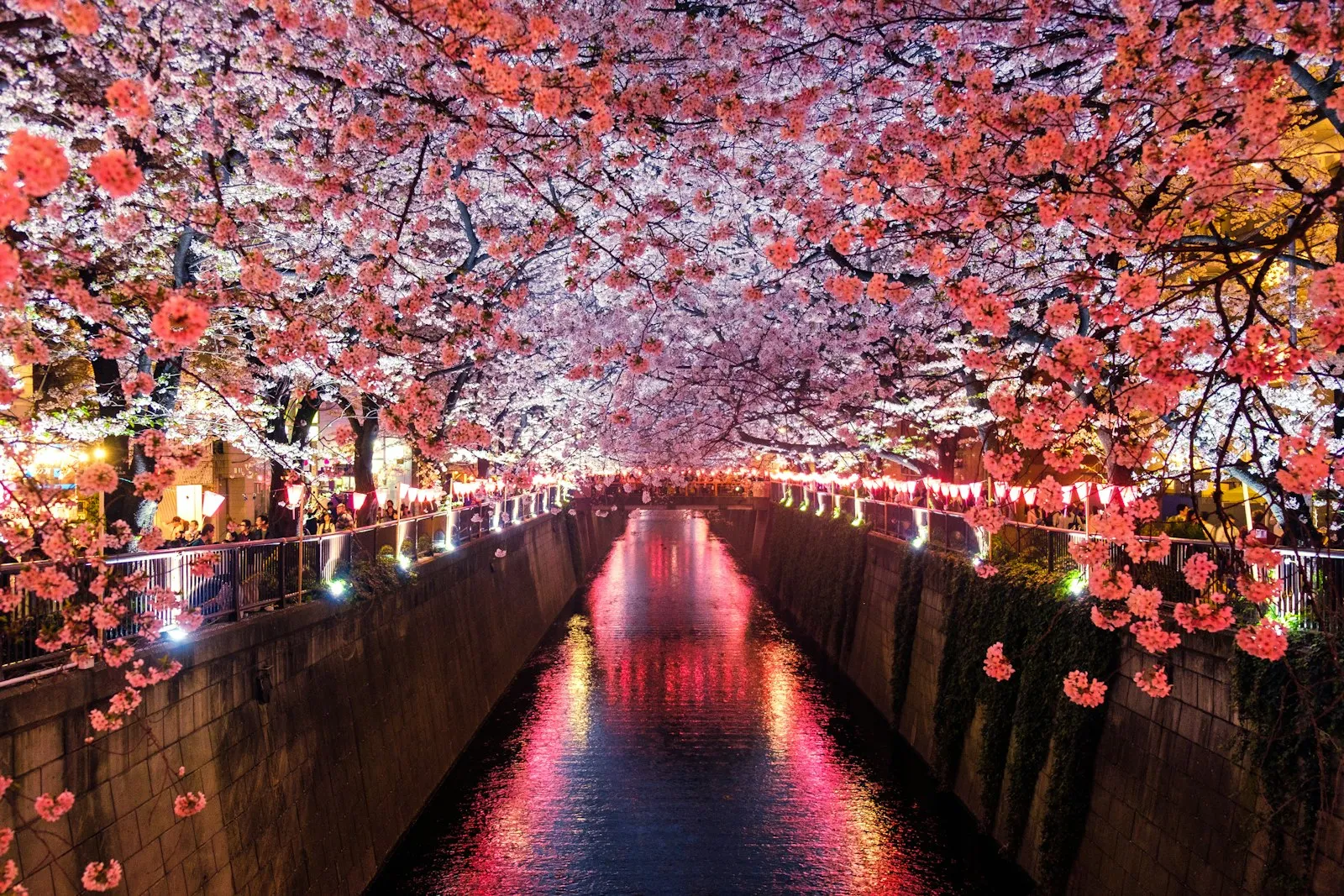
Two short windows carry most of Japan's reputation, and both fill up. Cherry blossom arrives from mid-March into April, earlier in the south and later as you go north, and in any one place it lasts days rather than weeks. Autumn colour comes from late October to early December and is the steadier of the two, since the leaves turn over a longer stretch. Kyoto is where everyone wants to see both, which means hotels, trains and the temple gates themselves are busiest exactly then. Book months ahead and start at dawn: a shrine at seven in the morning and the same shrine at ten are two different holidays.
Tsuyu and the August heat
Summer is the season visitors underestimate. Tsuyu, the rainy season, sits over most of the country from early June to mid-July, roughly 7 June to 20 July around Tokyo and Osaka, and the exact dates shift from year to year. It is not a washout, but it is grey and humid, and it is hard on an itinerary built around photographs. August follows with heat: in Tokyo the daily high averages above 31°C, with the humidity to match, and that changes how many hours of walking a day can hold. If summer is your only window, put the middle of the day indoors, move at either end of it, and accept that the mountains and Hokkaido will be more comfortable than the cities.
Typhoons, and what winter is good for
Typhoons can arrive from June to December, most often from July to September, says the UK FCDO, and for most visitors they are a scheduling problem rather than a danger. A rail line or a flight can be cancelled with about a day's notice, so leave slack around internal travel in those weeks and watch the Japan Meteorological Agency alerts, which reach you on your phone; the same alerts cover earthquakes. Winter is the underrated answer. It is dry and clear on the Pacific side, it is the cheapest time to do the golden route, and it is the season when Kyoto's temples are at their emptiest.
Golden Week, Obon, New Year, and staying connected
Three domestic holidays fill the trains and the hotels whatever the weather is doing: Golden Week in late April and early May, Obon in mid-August, and New Year. If your dates land on one of them, book everything earlier than feels reasonable, or shift by a week. Otherwise the short version is this: mid-March into April and late October to early December are the famous windows, winter is the cheap and clear one, and early June to mid-July and August are the two to think twice about. Goodbars sells a Japan eSIM you install at home and switch on when you land; it runs on NTT docomo, Japan's largest mobile network by mobile contracts, and our Japan coverage page shows where it reaches and what independent speed tests measure.