


A little respect goes a long way
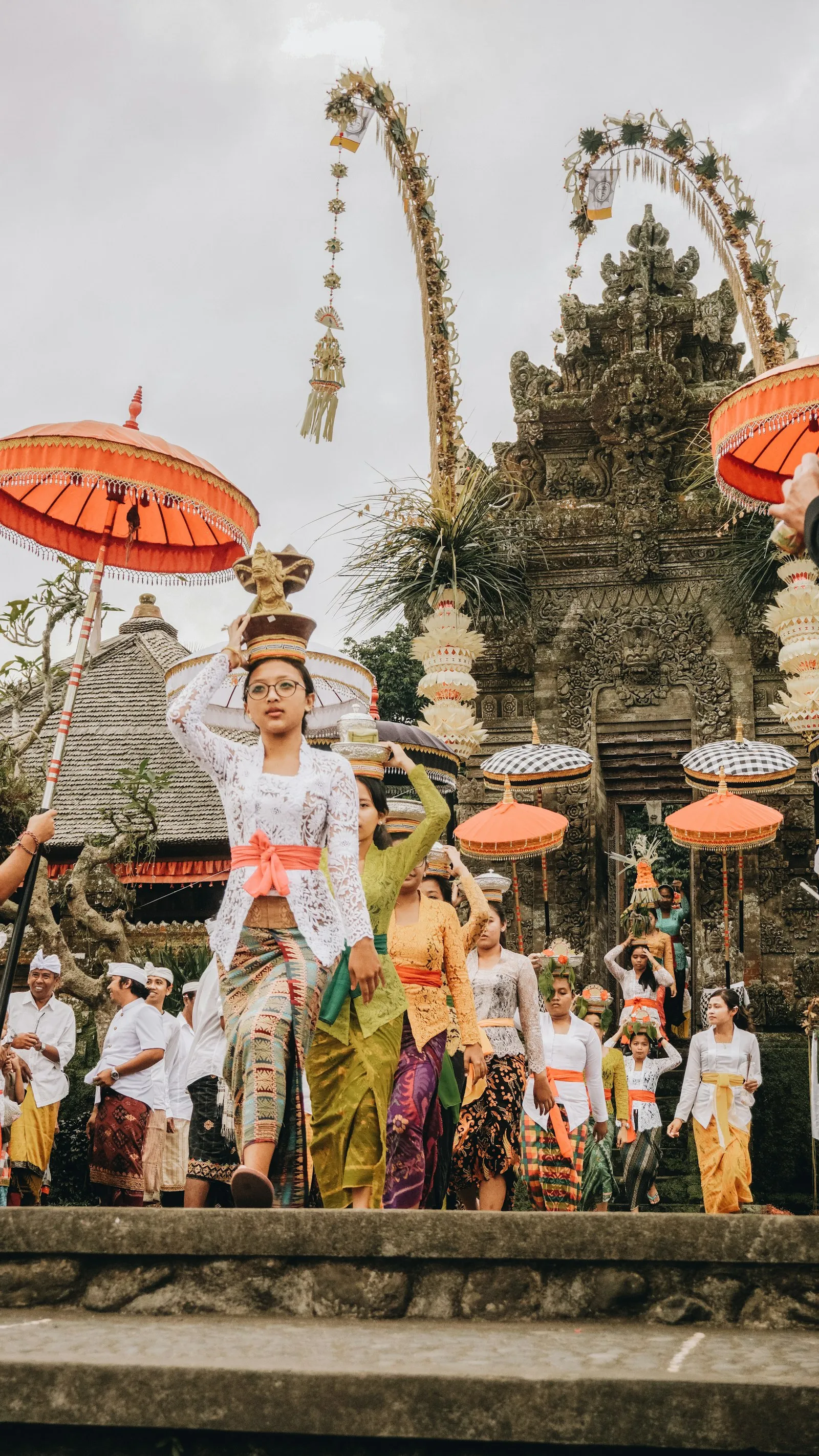
Bali is a deeply Hindu island where daily religious life happens in plain sight, and a handful of small courtesies will carry you a long way. The Balinese are famously warm and forgiving of honest mistakes, so nobody expects you to know every ritual. What they do notice is effort: dressing modestly at sacred sites, stepping around offerings, and following a few local norms. None of this is complicated, and getting it roughly right shows the respect that makes locals genuinely glad you came. This guide covers the customs that matter most day to day, so you can relax and enjoy the place.
Temple dress and behaviour
To enter a temple you need a sarong tied around your waist and a sash, with your shoulders covered, and this applies to everyone regardless of the heat. Many popular temples lend or include a sarong and sash with the ticket, but carrying your own is easy. There is also a long-standing local rule that women who are menstruating do not enter temples, as blood is considered ritually impure in these sacred spaces: it is a genuine custom, noted here so you can respect it rather than be caught out. Keep your voice down, never stand higher than a praying priest, and do not climb on shrines for a photo.
The offerings underfoot
Those small woven palm-leaf trays of flowers on doorsteps, pavements and shrines are canang sari, daily offerings, and you should step around them, never on them. Balinese families make and place them every day as an act of thanks and prayer, so they stay quietly important even when they are lying on the ground in a busy street. If you accidentally knock one it is not a disaster, but do your best to walk around them. The same care applies to the incense sticks and little baskets you will see set out beside shops and homes each morning.
Everyday manners
Use your right hand to give, receive and eat, keep dress modest away from the beach and pool, and take your shoes off where you are asked to. The left hand is traditionally considered unclean, so offer money or shake hands with the right. Swimwear is fine at the beach or pool but not in shops, restaurants, temples or villages, where a shirt and covered shoulders are expected. Remove your shoes before entering homes and many guesthouses, and avoid touching people, including children, on the head, which is regarded as the most sacred part of the body.
Nyepi, the Day of Silence
Once a year Bali observes Nyepi, the Balinese Day of Silence, when the entire island shuts down for 24 hours, including the airport. No flights land or depart, the streets empty, lights stay low, and most people, visitors included, stay indoors and quiet. If your trip overlaps it, you will spend the day inside your accommodation, so buy food and essentials in advance. The date is set by the Balinese lunar calendar and moves each year, usually falling in March or April, so check the exact date well before you book flights around that window.
Photos, bargaining and the bottom line
Ask before photographing people or ceremonies, bargain gently at markets but not in fixed-price shops, and lead with warmth. A smile and a quick request go a long way before you point a camera, especially at prayers or cremations, which are private moments and not attractions. Haggling is normal at markets and with some drivers, but keep it good-natured and remember a small sum matters more to the seller than to you; supermarkets and modern cafes have set prices. Do all of this and you will find the Balinese meet politeness with real generosity.