
Sensō-ji
On the map
Tokyo's oldest temple
Sensō-ji is Tokyo's oldest temple, founded in 645 and dedicated to Kannon. It stands in Asakusa, on the north-east side of the city, and it is the most visited religious site in the world: over 30 million people a year pass through it. That number is the single most useful thing to know before you go, because it shapes the whole visit. The grounds are open at all hours and the main hall by day, so the temple is at its best either early in the morning or late in the evening, once the lanterns are lit and the day crowd has gone home.
Kaminarimon and Nakamise-dōri
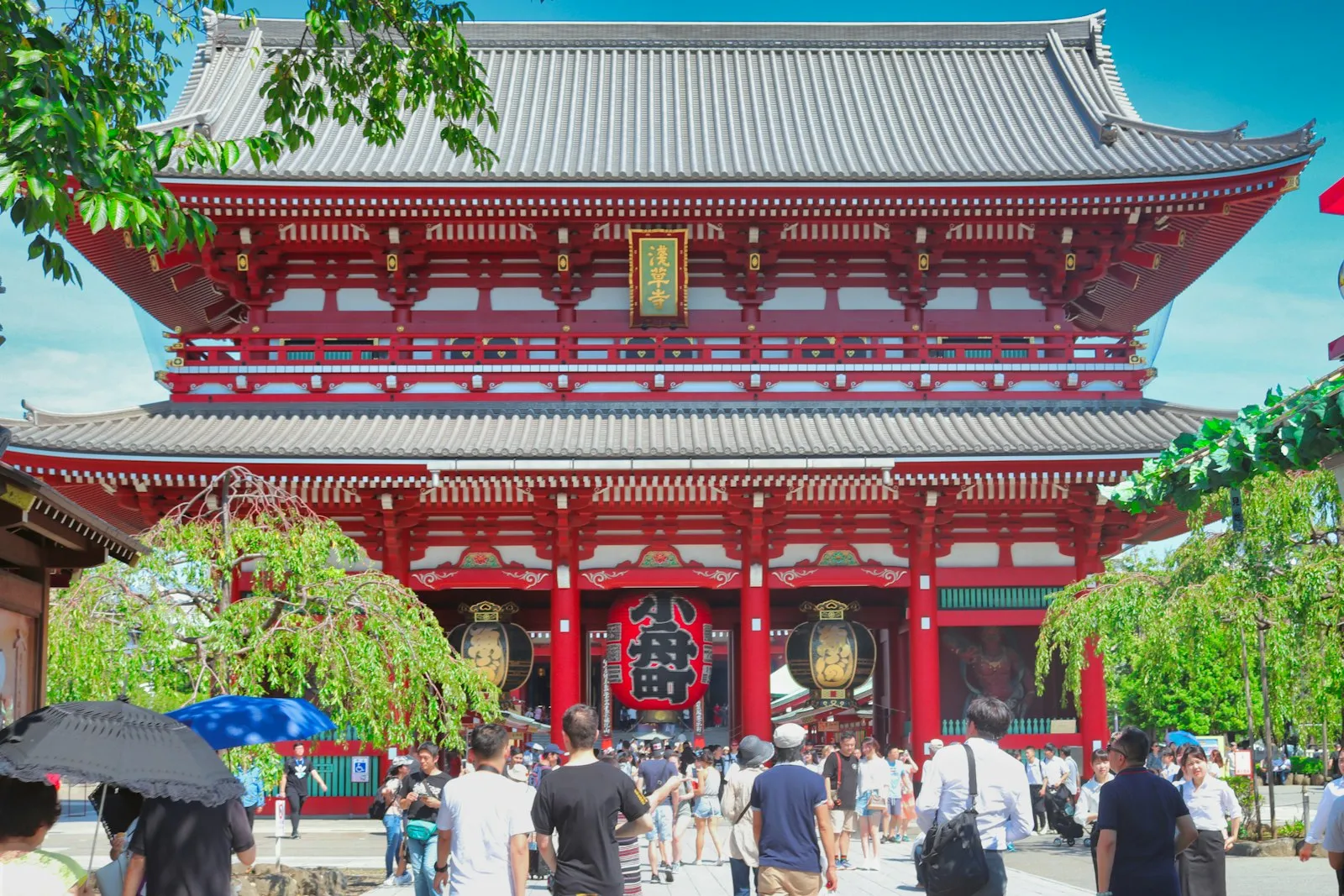
You do not so much arrive at Sensō-ji as walk up to it. The approach begins at the Kaminarimon, the outer gate with its huge red lantern, and carries on along Nakamise-dōri, a street of small stalls selling snacks, sweets, fans and souvenirs that runs all the way to the temple. It is commerce, and it has been for a very long time, so treat it as part of the visit rather than a detour around it. Eat what you buy where you buy it instead of walking with it, and keep hold of the wrapper: public bins are rare in Japan.
Temple manners, and the shrine next door
Asakusa Shrine stands right beside the temple, and it is Shinto rather than Buddhist, which puts two sets of manners on one site. At the shrine you bow as you pass through the torii, rinse your hands at the water basin, then drop a coin in the box and do two bows, two claps and one bow. At the temple a coin and a quiet bow is enough. Shoulders and knees covered is the safe choice at both, voices stay down, and shoes come off wherever you are asked for them. Smoking on the street is illegal in Tokyo, so use the designated areas.
Getting there and staying connected
Asakusa is on the subway, so the temple is a short walk from the station and an IC card is all you need to get to it: Suica and Pasmo work on trains, subways and buses across the country, and at convenience stores too. Come at dawn or after dark if you want the place without the queue. Bring some cash as well, since the small stalls on the approach still prefer it, and put the notes in the tray at the till rather than into the seller's hand. Goodbars sells a Japan eSIM you install at home and switch on when you land; it runs on NTT docomo, Japan's largest mobile network by mobile contracts, and our Japan coverage page shows where it reaches and what independent speed tests measure.
Common questions
How old is Sensō-ji?
It was founded in 645, which makes it the oldest temple in Tokyo. It is dedicated to Kannon and stands in Asakusa, on the north-east side of the city.
How busy is Sensō-ji?
Very. It is the most visited religious site in the world, with over 30 million people a year. The grounds are open at all hours, so early morning and late evening are the two windows where it feels like a temple rather than a queue.
What should I wear and do at Sensō-ji?
Shoulders and knees covered, voice down, shoes off where you are asked. At the temple, a coin in the box and a quiet bow. At Asakusa Shrine next door, which is Shinto, bow at the torii, rinse your hands at the basin, then two bows, two claps and one bow.
Will my phone work at Sensō-ji?
It is central Tokyo, so this is the easy end of Japan for a phone. Goodbars sells a Japan eSIM you install at home and switch on when you land; it runs on NTT docomo, Japan's largest mobile network by mobile contracts, and our Japan coverage page shows where it reaches and what independent speed tests measure.

Install before landingLAND ONLINE
Set up your eSIM at home and step off the plane already connected. No counter, no passport handed over, no queue.
See the plans- No ID needed
- No contract
- Instant email delivery
- Works on arrival