What hiking here actually looks like
Japanese mountains are worked into the transport system rather than kept apart from it. The Japanese Alps bisect Honshu, and the peaks over central Honshu have been objects of veneration and pilgrimage for centuries, which is why you find shrines at altitude and paths that have been walked for generations. Railways total 27,182 kilometres across dozens of companies, so most trailheads are a train and a local bus away, and IC cards such as Suica cover the local legs. Trails are signposted, often in Japanese only once you leave the famous routes. The season, not the distance, is what usually decides whether a route is open.
Mount Fuji
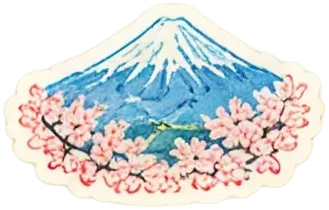
Fuji is the one everybody asks about, and it is a serious mountain rather than a long walk. It is an active stratovolcano with a summit at 3,776 metres, the highest in Japan, and it last erupted from 1707 to 1708. It sits about 100 kilometres south-west of Tokyo and is visible from the city on clear days. Snow covers the cone for roughly five months of the year, and the seasonal snowcap appears on an average date of 2 October, which is a good clue about when the climbing window closes. Fuji is one of Japan's Three Holy Mountains along with Mount Tate and Mount Haku, and it joined the World Heritage list as a cultural site on 22 June 2013. Climbing rules, opening dates and charges are set locally and change, so check the prefectural pages before you plan.
The Japanese Alps and Kamikochi
The Japanese Alps are three ranges, not one: the Hida, the Kiso and the Akaishi. The name was coined by the English archaeologist William Gowland, who meant only the Hida, and it was popularised by the missionary Walter Weston, whose memorial plaque stands at Kamikochi. Kamikochi is the obvious base, a valley with an alpine climate and the kind of walking that does not require a summit attempt. The ropeways do a lot of the work in this part of the country: the Komagatake Ropeway opened in 1967, the Shinhotaka Ropeway in 1970, and the Tateyama Kurobe Alpine Route was fully open in 1971. Those lift you into high terrain in minutes, which turns a two-day route into an afternoon.
Nikko and Hakone: mountains with hot water
These are the two ranges you can walk in the morning and soak in by the afternoon. Nikko covers a large stretch of rural Tochigi about 140 kilometres north of Tokyo, with elevations from 200 to 2,000 metres and a long list of hot springs. It is a cold, wet place by Japanese standards: the annual average temperature is around 7 degrees and annual rainfall around 2,202 millimetres, so waterproofs are not optional. Its shrines and temples, 103 structures in all, went on the World Heritage list in 1999. Hakone is milder, averaging around 13 degrees a year, and is built around Lake Ashi, the Hakone Shrine and hot springs within sight of Mount Fuji.
Short walks: Mount Misen and Nara
Not every walk in Japan needs a day and a pair of boots. On the island of Itsukushima, better known as Miyajima, Mount Misen rises to 535 metres and the Miyajima Ropeway carries you to within a 30-minute hike of the top, which makes it a half day rather than a project. Nara Park, established in 1880 and covering 502 hectares at the foot of Mount Wakakusa, is flat walking through temple grounds with over 1,200 wild sika deer in it; treat them as wildlife, because at least 164 people were injured by them between 2017 and 2018. Both of these work as a break between city days and neither needs special kit beyond shoes you can climb steps in.
Weather, altitude and getting help
The UK FCDO names altitude sickness as a risk in parts of Japan, and the weather here is the other half of the problem. Typhoon season runs from June to December, peaking from July to September, and earthquakes can happen at any time, so keep Japan Meteorological Agency alerts switched on and act on them rather than finishing the route. The emergency number is 119 for an ambulance. Medical facilities are high quality but treatment is expensive and you should expect to pay the whole cost yourself, and a hospital may check your insurance before treating you, so travel insurance that covers mountain activity is not a formality. Goodbars sells a Japan eSIM you install at home and switch on when you land; it runs on NTT docomo, Japan's largest mobile network by mobile contracts, and our Japan coverage page shows where it reaches and what independent speed tests measure.