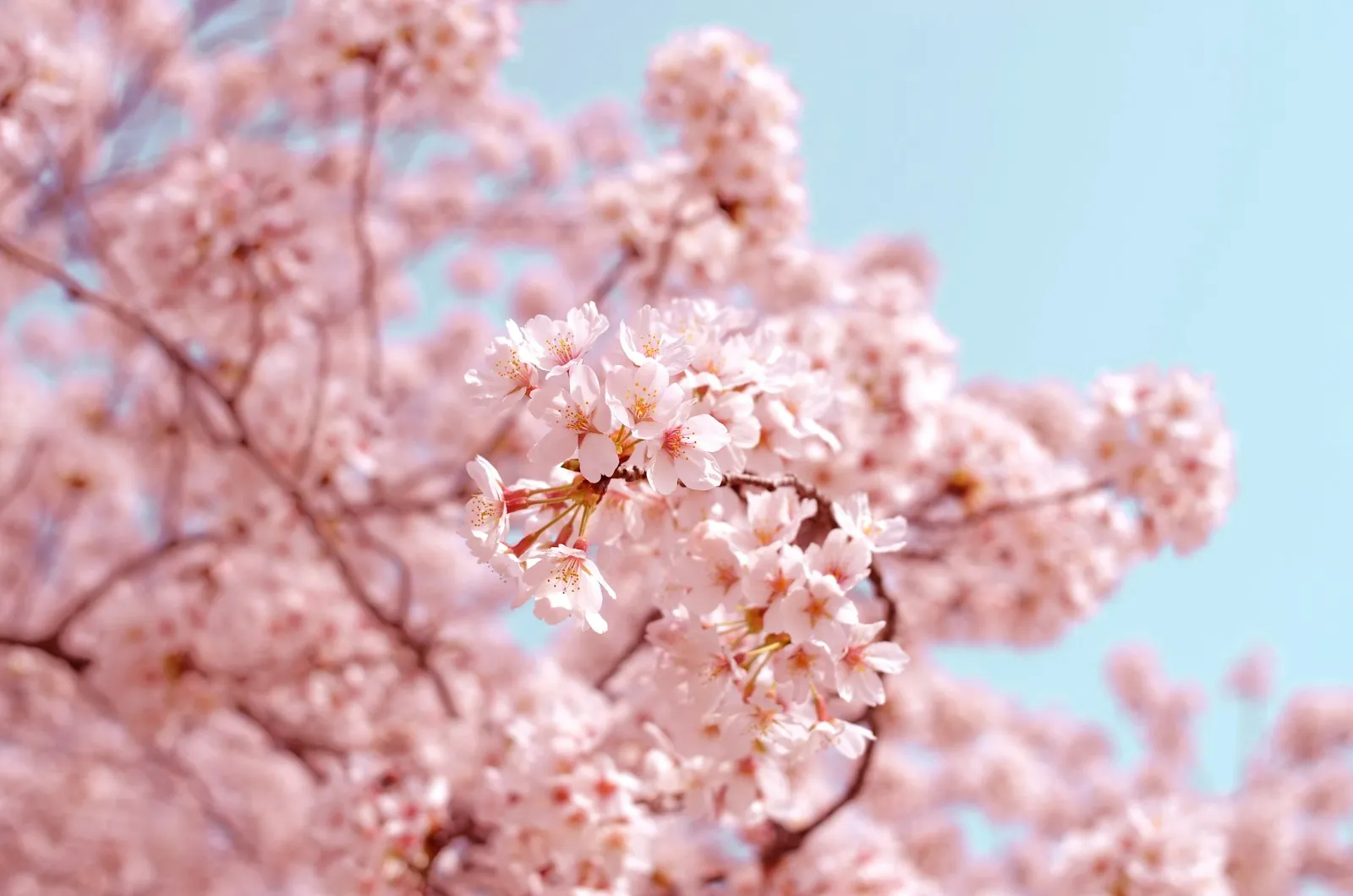
The front, and what it actually promises
The sakura-zensen, the cherry blossom front, is announced each year by the Japan Meteorological Agency, and everyone planning hanami watches it. Cherry trees bloom across Japan from the end of March into early May, and around the second week of January on Okinawa. The 2026 forecast from JNTO put first bloom in Tokyo on 19 March, Fukuoka on 24 March, Osaka on 26 March and Sapporo on 19 April, and said plainly that the forecast is subject to change with the weather. In one place, the blossoms only last a week or two. So the front tells you roughly where to be, not which day to fly.
Why you cannot book it a year ahead
The date moves, and it has been moving in one direction. The average peak bloom day was around 17 April in the 1850s; by the 2020s it was 5 April, while the average temperature rose by about 3.4 degrees over the same period. Peak blooms have been trending earlier since 1800, an example of season creep. Add the year-to-year swing the forecast warns about and a trip booked twelve months out is a bet. Three ways to handle it: book refundable rooms, pick dates in the middle of a city's window rather than at its edge, or plan to follow the front north, which is the only approach that reliably gives you two chances.
Hanami by day, yozakura by night
Hanami means flower viewing, and in practice it is an outdoor party under the trees, by day or after dark. The night version has its own name, yozakura, and in places like Ueno Park temporary paper lanterns are hung for it. On Okinawa, decorative electric lanterns go up in the trees, for example on the way up Mount Yae near Motobu and at Nakijin Castle. Two things to know before you sit down: bins are rare in Japan and you carry your rubbish out with you, and there are local bans on drinking alcohol in specific places on certain days, so check the rules for the park you have picked rather than assuming.
Kyoto and Tokyo in blossom week
Kyoto is where everyone wants to be for blossom, so the rule there is simple: book early and start at dawn. April is also when Gion's dances run, from 1 to 30 April each year, at the height of the sakura season. One cost to know before you compare rooms: Kyoto City revised its accommodation tax on 1 March 2026, and it is now charged per person per night in bands, from 200 yen under 6,000 yen a night up to 10,000 yen at 100,000 yen or more. Tokyo has its own accommodation tax, with rooms under 10,000 yen per person per night exempt. Neither changes whether you go; both change what the final bill looks like.
Golden Week lands right after
The blossom window runs into Japan's biggest domestic travel period. Golden Week is the holiday stretch from 29 April to 5 May, with four official public holidays inside it, and many people take the whole week off, so trains, hotels and reserved seats all go early. If you are chasing late blossom north, notice what that means: the 2026 forecast put Sapporo's first bloom on 19 April, which puts a Hokkaido blossom trip on the edge of Golden Week. Either book well ahead and accept the crowds, or place your trip in the quieter first half of April and let Kyoto and Tokyo do the work.
A plan that survives a forecast change
Build the trip so the blossom is a bonus, not the point. Pick one base with enough to do in the rain, keep two days loose, and decide where to spend them once you are in the country and the forecast has been updated. Dawn starts beat crowd-avoidance tricks, and the same trees look different under lanterns at night. You will be refreshing a forecast page daily, which is a data habit rather than a heavy one. NTT docomo's May 2026 list names 5G SA spots at JR Kyoto Station and the Marunouchi plaza at Tokyo Station, and does not name Ueno; expect LTE there, which docomo reports at about 100% population coverage, with 5G depending on your handset, and docomo warns that big events congest the network. Goodbars sells a Japan eSIM you install at home and switch on when you land; it runs on NTT docomo, Japan's largest mobile network by mobile contracts, and our Japan coverage page shows where it reaches and what independent speed tests measure.