


Bali actually grows the coffee it serves
Bali is not just a backdrop for coffee, it grows a real and distinct one. The Kintamani region, on the slopes of Mount Batur, is the island's largest coffee-growing area: arabica planted at around 1,200 metres, often intercropped with citrus trees, which gives the beans a brighter, faintly citrusy edge than coffee from elsewhere in Indonesia. Lower-lying areas like Buleleng grow robusta instead. A lot of what gets marketed as "Bali coffee" abroad is a blend; a genuine single-origin Kintamani roast tastes noticeably different, and it is worth asking a roastery whether that is what you are drinking.
Kopi Bali: the traditional way, and the luwak question
The traditional way to drink coffee in Bali has nothing to do with an espresso machine. Kopi Bali is coarsely ground coffee brewed by pouring boiling water straight over the grounds in a glass, no filter, so the grounds settle at the bottom and you sip carefully from the top; it is strong, earthy, and often sweetened with palm sugar. Kopi luwak, the civet coffee sold heavily at tourist stops, is a separate story: it is genuinely rare when sourced from wild civets, but most roadside plantation tastings use caged animals, so treat any "wild" claim with real skepticism unless the farm can back it up.
Canggu and the west coast
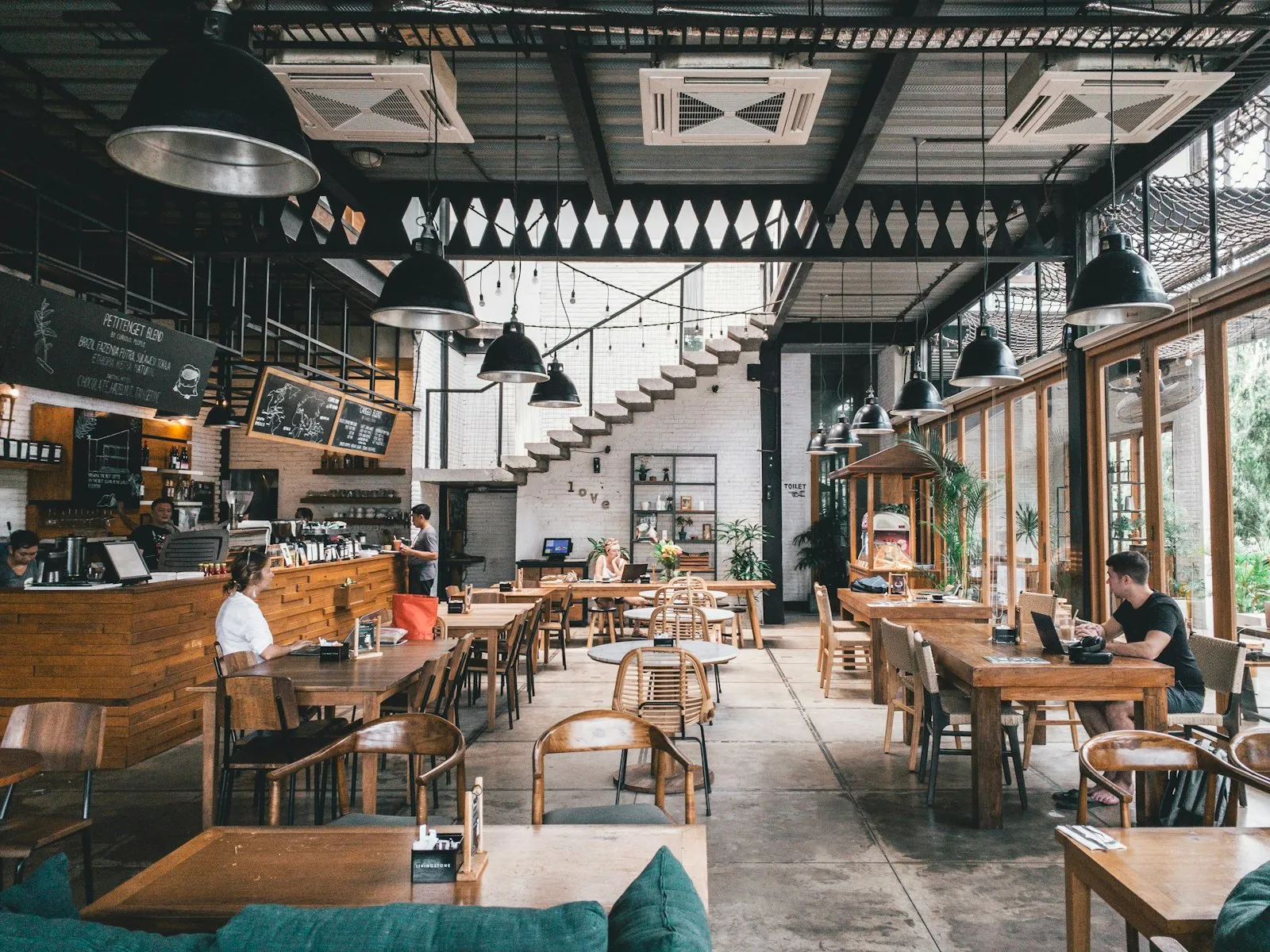
Canggu's coffee scene doubles as its work scene, so a good cup usually comes with a chair for the whole morning. ZIN Cafe roasts its own beans sourced from Kintamani and serves them across three open floors with free coworking space, one of the more reliable combinations of quality coffee and a place to actually sit. It is a useful base if coffee is only half of why you are there. For the fuller rundown of Canggu's laptop-friendly cafes, see our Canggu cafes and coworking guide.
Ubud: Bali's specialty-coffee capital
Ubud is Bali's specialty-coffee capital, with more serious roasteries per block than anywhere else on the island. Seniman Coffee Studio was the original specialty-coffee boutique here, roasting single-origin beans from across Indonesia on-site and offering proper pour-over and syphon brewing, not just espresso. Anomali Coffee, a national chain founded in 2007, brings the same single-origin focus in a more minimalist room. And Clear Cafe, better known for its raw and vegan menu than its coffee list, is worth a mention for the room itself: a sprawling, plant-filled, almost cave-like space that is one of Ubud's most photographed interiors.
The influencer-cafe reality
The "influencer cafe" reputation is earned, and it is worth knowing before you plan a day around one. A real slice of Bali's cafe scene, especially in Canggu, is designed for the photo first: perfect plating, jungle-plant walls, a smoothie bowl priced closer to a full meal than a snack. That does not make the coffee bad, but it does mean the most photogenic address is not always the best cup, and a plain local warung with a simple filter drip two streets over often serves better coffee for a third of the price. Treat the aesthetic spots as a nice occasional stop, not the whole itinerary.
Staying online while you cafe-hop
Most of this guide works better with a working phone in hand: checking a roastery's hours, finding the actual address behind an Instagram geotag, or booking a table before a cafe fills. Cafe Wi-Fi across Bali is fine for browsing but gets patchy the moment a room fills at brunch, so keep a Bali eSIM or a plan from the pricing page running as backup, especially if you are hopping between Canggu, Ubud and Uluwatu in the same day.