


Flores
Flores is the long volcanic island east of Bali that most travellers only see the western tip of. Beyond Labuan Bajo it turns into mountain roads, Catholic hill towns, the tri-coloured crater lakes of Kelimutu and villages you reach on foot. It is slower and rougher travel, and that is the point.
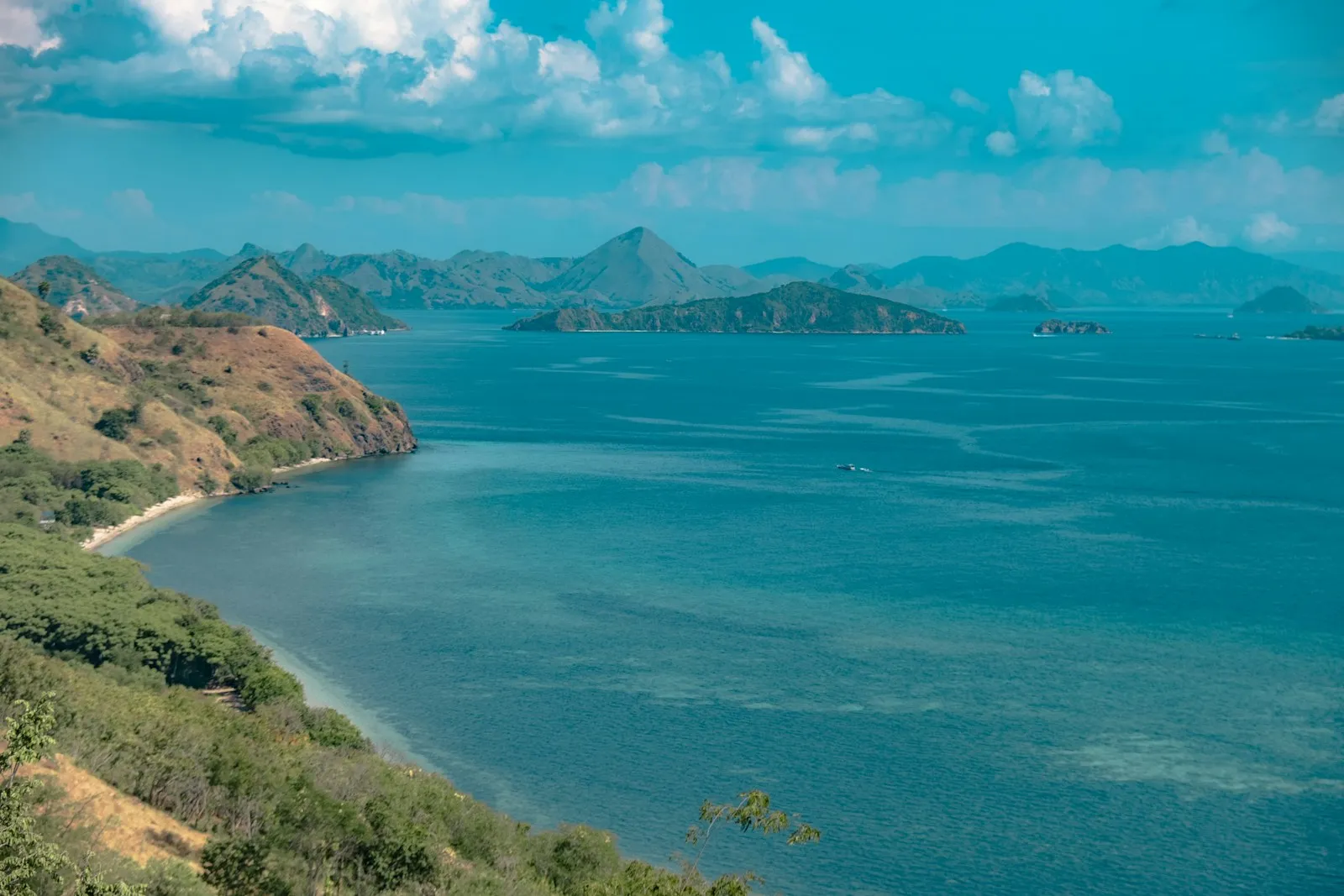
Flores in a nutshell
Flores is a long, mountainous island in East Nusa Tenggara, and almost everything worth the trip sits east of Labuan Bajo, inland and uphill. A volcanic spine runs the length of it, so the road climbs and drops constantly between coastal towns, terraced rice fields, coffee country and cloud forest. Culturally it stands apart from Bali and Lombok: Flores is majority Roman Catholic, a legacy of Portuguese and later Dutch missionary presence, so you pass churches and roadside shrines rather than temples, and local languages differ by district. Ruteng, Bajawa, Ende and Maumere are the main towns along the way, each a plausible overnight stop.
Kelimutu and its three crater lakes
Kelimutu is the single most famous sight on Flores: three crater lakes on one volcano summit that hold visibly different colours and change over time. The mountain sits at roughly 1,600 metres inside Kelimutu National Park, and the lakes have been recorded shifting through turquoise, green, red, brown and near black as volcanic gas chemistry changes underneath them. Nobody can predict what colour you will get, and photos you have seen may be years old. The usual base is Moni, the village below the park: people leave in the dark for a short drive to the trailhead and a walk of well under an hour to the viewpoints. Sunrise is the draw, and it can be cold, crowded and completely clouded in.
Wae Rebo and the traditional villages
Wae Rebo is a Manggarai village of cone-shaped communal houses high in the western mountains, and reaching it is a real trek rather than a viewpoint stop. The village sits at around 1,200 metres and has no road: from the trailhead at Denge it is commonly described as roughly 8 to 9 kilometres and two to three hours of steady uphill walking through forest and coffee gardens, longer in rain. Most visitors stay the night in one of the houses, which means accepting shared sleeping space, simple food and a welcome ceremony led by the community. Bena near Bajawa is far easier to reach by road if the walk is out of reach.
The Trans-Flores highway
The Trans-Flores highway is the single road that ties the island together, and driving it is a multi-day overland journey rather than a transfer. End to end it covers roughly 600 to 700 kilometres depending where you stop, but the distance understates it: the road is narrow, winding and slow, so a driving day covers far less ground than the map suggests. Most people break it into stages, commonly Labuan Bajo to Ruteng, on to Bajawa, then Ende or Moni, and finally Maumere for the flight out. Options are a private car with driver, local buses, or a motorbike if you are experienced. Motion sickness is a genuine consideration on this route.
Set your expectations honestly
Flores is not a resort destination, and treating it like one is the fastest way to be disappointed. Outside Labuan Bajo you find guesthouses and small local hotels rather than beach clubs, spas or reliable fine dining, hot water is not a given, and menus narrow considerably. Distances take longer than planned, landslides happen in the wet season, and English is spoken unevenly outside the tourist towns. What you get in exchange is an island that still feels lived in rather than staged, striking volcanic scenery and genuine hospitality. Give it a week at minimum, ideally ten days, and go in the drier months if the roads worry you.
Staying connected across Flores
Telkomsel has the widest reach of any Indonesian network and Goodbars runs on it, but Flores is exactly where the honest limits of that reach show up. The towns are generally fine: expect workable 4G in Labuan Bajo, Ruteng, Bajawa, Ende and Maumere, enough for maps, messaging and booking the next night. Between them it thins out fast, and on mountain passes, in Moni before dawn and at villages like Wae Rebo you should plan on having no usable signal at all. No eSIM fixes remote terrain. What it does do is keep you connected in the towns at either end of each leg, which is where you actually book drivers, confirm guides and tell people you arrived.
Common questions
How do you get to Flores?
Most people fly from Bali to Labuan Bajo in the west or Maumere or Ende further east, then travel overland along the Trans-Flores highway. Flying into one end and out of the other avoids backtracking. Ferries also connect Flores to neighbouring islands, but they are slow.
Is Kelimutu worth getting up for sunrise?
Usually yes, with the caveat that cloud can hide everything and the colours are unpredictable. The three lakes hold visibly different shades that have changed repeatedly over the years, so what you see may not match the photos that brought you there. Bring a warm layer.
How hard is the trek to Wae Rebo?
It is a genuine hike, not a stroll. From the trailhead at Denge it is commonly described as roughly 8 to 9 kilometres and two to three hours of steady uphill walking, longer in rain or with a heavy pack. Most visitors stay overnight in the village.
How many days do you need in Flores?
A week is the practical minimum for an overland run from Labuan Bajo to Maumere, and ten days or more is more comfortable. Roads are slow and winding, so plan fewer stops than the map tempts you into and leave slack for delays.
Is Flores like Bali?
No. Flores is majority Catholic rather than Hindu or Muslim, far less developed for tourism, and mountainous rather than resort-lined. Accommodation is simpler, distances take longer and services thin out quickly outside the main towns. Come for landscape and culture, not comfort.
Is there mobile signal in Flores?
In the towns, generally yes on Telkomsel. Between them, often not. Mountain roads, remote villages and trekking areas such as Wae Rebo commonly have no usable signal, so download offline maps and treat connectivity as something you have in town rather than everywhere.
On the map


Wherever you goSTAY ONLINE
Pick a plan, install in minutes, and step off the plane connected in Bali. From €13.99.
See the plans- No ID needed
- No contract
- Instant email delivery
- Works on arrival