


Komodo & Labuan Bajo
Labuan Bajo is the harbour town on western Flores that serves as the gateway to Komodo National Park, where wild Komodo dragons, the Padar viewpoint and some of Indonesia's better-known reefs sit a boat ride offshore. It rewards planning, and it is a place where mobile coverage genuinely runs out.
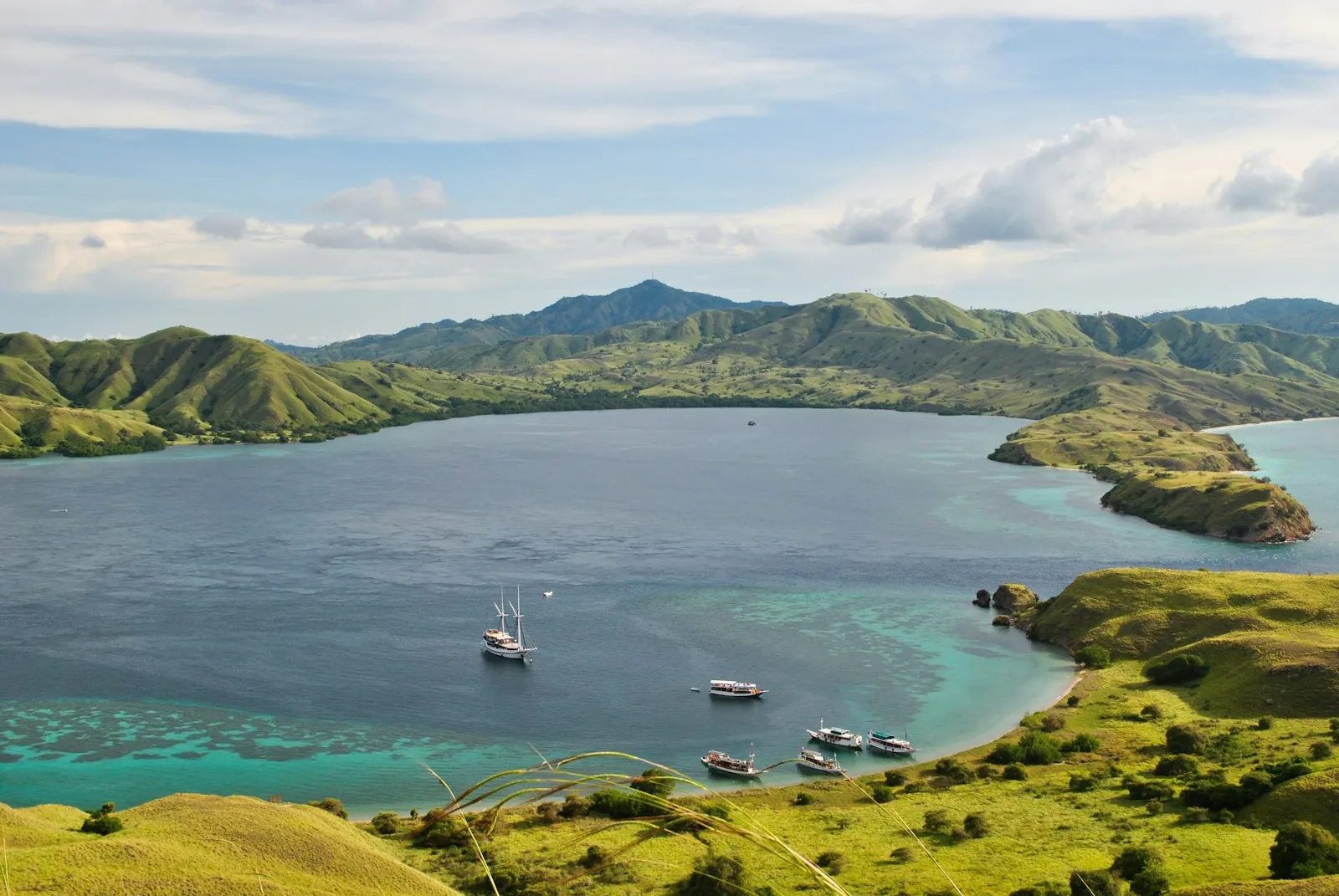
Labuan Bajo and Komodo in a nutshell
Labuan Bajo is the harbour town on the western tip of Flores, and almost every Komodo National Park trip starts and ends there. The town is a working port with a strip of hotels, dive shops and hillside restaurants looking west across the bay, grown quickly over the past decade. The park is the reason people come: a group of islands including Komodo, Rinca and Padar, protected since the 1980s and inscribed by UNESCO, where free-ranging Komodo dragons live alongside reefs, manta cleaning stations and dive sites with strong current. As of July 2026 it is one of eastern Indonesia's busiest destinations, and boats fill up in peak season.
Seeing the dragons, honestly
You can only walk among Komodo dragons with a park ranger, and that rule exists because they are genuinely dangerous wild animals rather than a photo prop. Rangers meet groups at the stations on Komodo and Rinca islands and lead short, medium or long loop trails across dry savannah and forest. Rinca is the shorter boat ride and often the more reliable sighting; Komodo carries the bigger name. Dragons are venomous, fast over short distances and unpredictable around food, so hold the distance the ranger sets, stay with the group and never wander off for a better angle. Sightings are never guaranteed either: the animals roam freely, and midday heat pushes them deep into shade.
Padar, Pink Beach and Manta Point
Beyond the dragons, the three headline stops are the Padar Island viewpoint, Pink Beach and manta snorkelling at Manta Point. Padar is a stepped climb along a ridge to the view of three curved bays that appears on most Komodo photographs. It is a stairway rather than a technical hike, but it is steep, hot and fully exposed, which is why most boats go at first light. Pink Beach takes its tint from red coral fragments mixed through white sand, and the colour reads stronger at the waterline than in edited photos. Manta Point is a cleaning station where reef mantas pass through; current can be strong and sightings vary by season and luck.
Day boats, liveaboards and choosing carefully
You have two basic options, a day-trip boat out of Labuan Bajo or a liveaboard of two nights or more, and boat quality across the fleet varies enormously. Day trips string together Padar, a beach stop, a ranger walk on Rinca or Komodo and a snorkel site, returning to town each evening. Liveaboards reach further anchorages and quieter dive sites, and range from basic wooden phinisi to genuinely comfortable vessels. Be honest about the risk: safety records here are mixed, and engine failures, fires and sinkings have been reported over the years. Ask in writing about life jackets, radio, a tender boat and crew numbers, read recent independent reviews rather than brochure photos, and treat the cheapest overnight quote as a warning.
Park fees and permits change often
Komodo National Park charges entry and activity fees, and those charges have been raised, proposed, withdrawn and restructured repeatedly, so check the current official rate instead of trusting any figure you read second hand. A widely publicised premium annual fee was announced and then cancelled after objections from local operators, and reporting through 2026 describes a daily visitor cap and a shift to online pre-booking through the park's official reservation system. Fees are often bundled into a tour price, but not always. Confirm with your operator, in writing, exactly what is included, and verify against official park channels close to your travel date.
Staying connected around Labuan Bajo
Labuan Bajo town has usable 4G, the park mostly does not, and no eSIM changes that. Goodbars runs on Telkomsel, which has the widest reach of any Indonesian network, and in practice that means a workable signal around town, the harbour and most hillside hotels. Once your boat clears the bay, coverage falls away fast, and on the ranger trails and outer anchorages you should expect nothing at all. Plan around it rather than fight it: download offline maps and send what matters before you sail. The honest value of a working data plan here is being connected in town, before and after the boat, not out on the water.
Common questions
Is Komodo worth visiting?
For most people, yes, if you come for the whole park rather than only the dragons. The Padar viewpoint, the reefs and the island scenery carry the trip even when the dragons stay in the shade. It is worth less if you dislike long boat days or expect guaranteed wildlife sightings.
Can you see Komodo dragons without a guide?
No. Walks on Komodo and Rinca are ranger-accompanied by rule, and the rule is sensible: dragons are venomous, fast over short distances and unpredictable. Stay with your group, keep the distance the ranger sets and do not leave the trail for a photograph.
How much are Komodo National Park fees?
Check the current official rate rather than any figure quoted in an older article. Park charges have been raised, proposed, cancelled and restructured several times, and as of July 2026 reporting also describes a daily visitor cap and online pre-booking. Ask your operator in writing what the tour price includes.
Day trip or liveaboard in Komodo?
Day trips out of Labuan Bajo cover the main sights and let you sleep on land. Liveaboards reach quieter dive sites and further anchorages. Quality varies enormously in both categories, so weigh the operator's safety equipment, crew and recent reviews more heavily than the itinerary.
Is there phone signal in Komodo National Park?
Mostly not. Labuan Bajo town has usable 4G on Telkomsel, but coverage drops away quickly once a boat leaves the bay, and on the islands and outer anchorages you should expect none. Download maps and message home before you sail.
When is the best time to visit Labuan Bajo?
The dry season, roughly April to October, gives the calmest seas and the most reliable boat days, with July and August the busiest. The wetter months bring rougher crossings and more cancellations. Manta and dive conditions shift through the year, so ask your operator about the specific weeks you are considering.
On the map


Wherever you goSTAY ONLINE
Pick a plan, install in minutes, and step off the plane connected in Bali. From €13.99.
See the plans- No ID needed
- No contract
- Instant email delivery
- Works on arrival