Itsukushima Shrine (Miyajima)
On the map
The floating torii
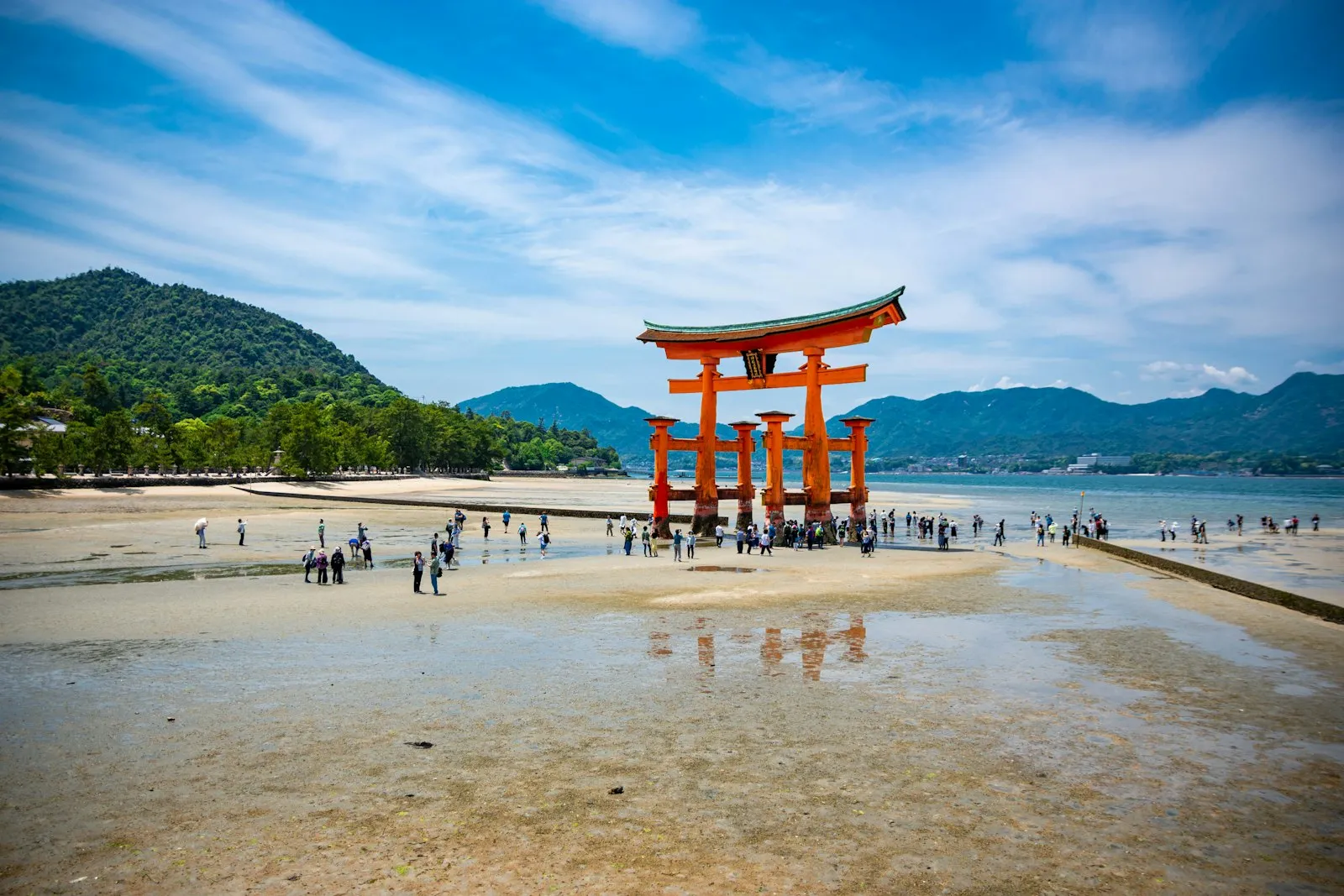
The gate stands in the sea, and that is the whole point. Itsukushima Shrine is a Shinto shrine on the island of Itsukushima, which almost everyone calls Miyajima, in the city of Hatsukaichi in Hiroshima Prefecture. Its otorii, the great gate, is about 15 metres tall, painted vermilion and built of decay-resistant camphor wood, and at high water it appears to stand clear of the shore. The shrine itself is two main buildings, the Honsha and the Sessha Marodo-jinja, with seventeen further structures around them. The complex is a UNESCO World Heritage Site, and the Japanese government has designated several of its buildings and possessions National Treasures.
Kiyomori, and the island's rules
The shrine you see is credited to Taira no Kiyomori, a court noble who paid for much of its construction while he was governor of Aki Province in 1168. Mori Motonari, lord of the Choshu Domain, rebuilt the honden in 1571, and the noh stage extending from the main shrine dates from 1590. Purity counts for more here than at most shrines: since 1878 no births and no deaths have been permitted near it. The island is one of the Three Views of Japan named by Hayashi Gaho in 1643, and the Kangen-sai, a boat ritual Kiyomori began in the twelfth century, is still the largest ceremony the shrine holds.
Mount Misen and the rest of the island
Miyajima is rural and mountainous, 30.39 square kilometres with a population of about 2,000, so the shrine is not the only reason to cross. Mount Misen is the high point at 535 metres, and the Miyajima Ropeway carries you to within a thirty-minute hike of the summit. The five-storied pagoda above the shrine was built in 1407, and Senjokaku, the hall Toyotomi Hideyoshi began in the sixteenth century, is the largest structure on the island. Daiganji, which administered the shrine until Shinto and Buddhism were formally separated in 1868, is one of Japan's three best-known Benzaiten temples. The upper slopes carry cherry blossom in spring and maples in autumn.
Getting there, the ticket and staying connected
The JR Miyajima Ferry crosses from Miyajimaguchi to the island in ten minutes, and the shrine charges 300 yen to enter, so carry coins. This is a Shinto shrine: bow at the torii, rinse your hands at the basin, and at the offering box use two bows, two claps and one bow. Check the weather before you commit to a day here, because the buildings stand on the water and Typhoon Songda damaged them badly on 5 September 2004. Goodbars sells a Japan eSIM you install at home and switch on when you land; it runs on NTT docomo, Japan's largest mobile network by mobile contracts, and our Japan coverage page shows where it reaches and what independent speed tests measure.
Common questions
How much does it cost to enter Itsukushima Shrine?
Entry to the shrine is 300 yen. Bring coins: Japan still runs on cash at shrines and temples.
How do you get to Miyajima?
By ferry from Miyajimaguchi, on the mainland in Hatsukaichi. The JR Miyajima Ferry makes the crossing in ten minutes.
How big is the floating torii gate?
About 15 metres tall, painted vermilion and built from decay-resistant camphor wood. It is the shrine's best-known feature, though the noh stage of 1590 is worth a look too.
Will my phone work on Miyajima?
docomo reports LTE population coverage of about 100 percent nationwide in its 2025 sustainability report, and does not name Miyajima in its published 5G spot lists, so treat 5G as handset and spot dependent here. Download the island map before the ferry. Goodbars sells a Japan eSIM you install at home and switch on when you land; it runs on NTT docomo, Japan's largest mobile network by mobile contracts, and our Japan coverage page shows where it reaches and what independent speed tests measure.
Install before landingLAND ONLINE
Set up your eSIM at home and step off the plane already connected. No counter, no passport handed over, no queue.
See the plans- No ID needed
- No contract
- Instant email delivery
- Works on arrival