Do you actually need a car?
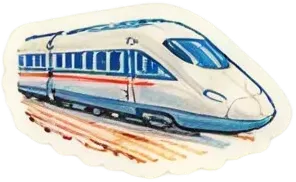
For most first trips the answer is no, and the railway is why. Japan has 27,182 km of railway run by dozens of companies, all of them known for punctuality, and some 250 shinkansen trains on 2,951.3 km of line running at 260 to 320 km/h. The Tokaido Shinkansen, open since 1964, links Tokyo, Yokohama, Nagoya and Osaka along 552.6 km: Tokyo to Kyoto takes around 2.5 hours and Kyoto to Osaka fifteen minutes. In the cities a car is a liability, not an asset. A car earns its place only where the timetable thins out, which is the countryside, the mountains and the islands.
The permit you have to arrange before you fly
This is the part that strands people at the rental desk, and it cannot be fixed after you land. A foreign licence on its own is not enough to drive in Japan: depending on which country issued it, you need either an international driving permit of the right kind or an official Japanese translation of your licence, and the two routes are not interchangeable. Find out which one applies to your licence from your own licensing authority before you fly, and get it in writing. Bring the original home licence as well as the permit or translation, and your passport, which you must carry at all times anyway. Confirm with the rental company what documents they will accept when you book.
What is different behind the wheel
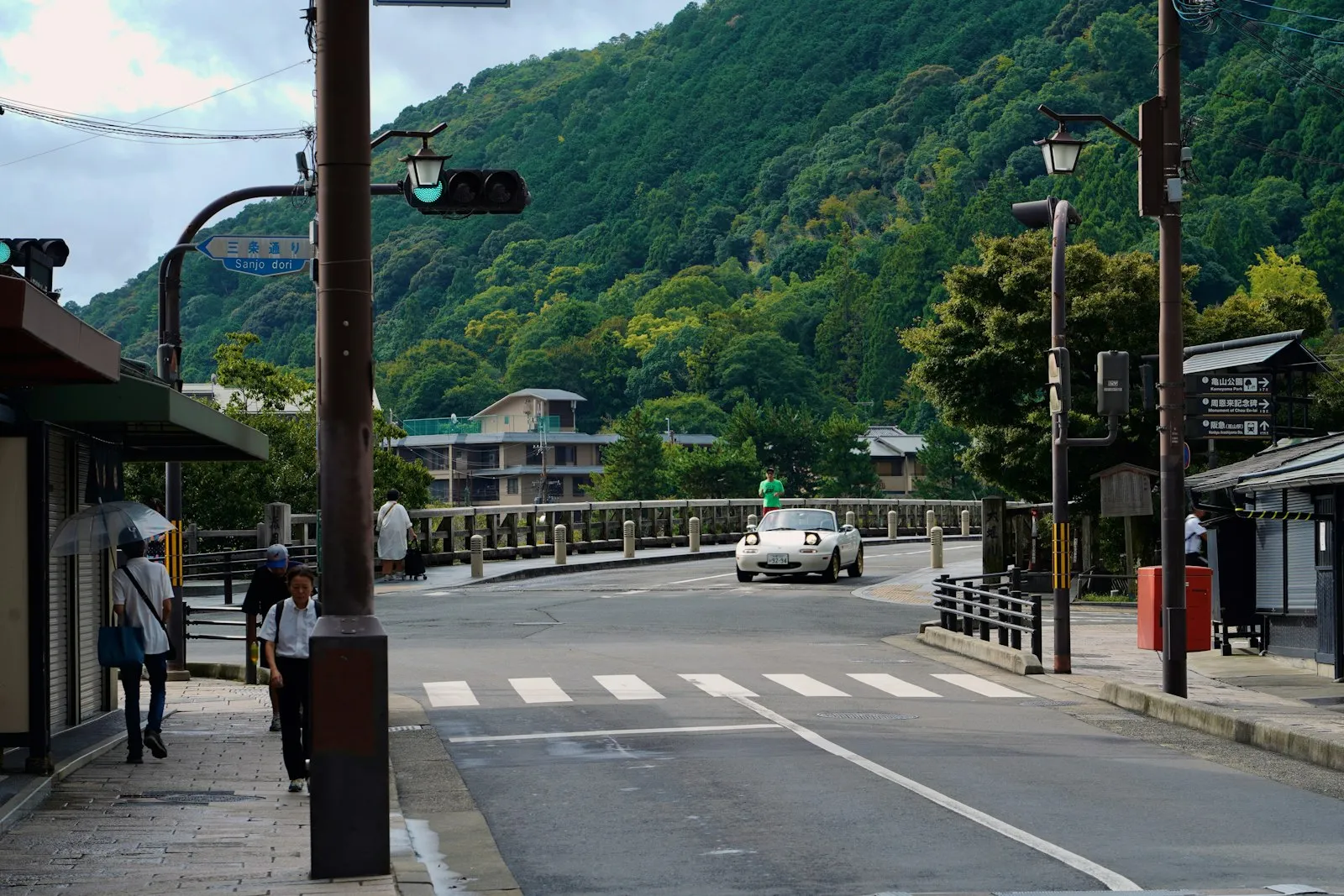
Japan drives on the left, and that is the smallest of the adjustments. Expressways are toll roads, and rental cars are normally set up to pay them electronically, so ask the desk how tolls work on your car and what they will cost on your route before you drive off. Rural lanes are narrower than the map suggests and often have no pavement, mountain roads can close or require winter equipment, and city parking is scarce and paid, so check with your accommodation whether it has a space before you book a car at all. Ask for an automatic if that is what you drive at home, and take the car's phone mount seriously.
Where a car genuinely pays off
The case for a car is the places the timetable barely reaches. Shirakawa-go, the gassho-zukuri village in Gifu that became a UNESCO World Heritage Site with Gokayama in 1995, sits in a village of about 1,630 people where 95 percent of visitors arrive and leave the same day, and a car lets you stay past the coaches. The Japanese Alps bisect Honshu, with Kamikochi and the Tateyama Kurobe Alpine Route, fully open since 1971, at their heart. Nikko sits about 140 km north of Tokyo at elevations from 200 to 2,000 m with its shrines and hot springs. On Okinawa Island, roughly 106 km long and 11 km wide on average, driving is simply how the island works.
The legal and weather picture, taken seriously
Japan is a safe country to drive in and an unforgiving one to break the law in. The FCDO is blunt about it: you can be detained without charge for up to 23 days even for a minor offence, drug offences carry zero tolerance, and you must be able to show your status, so the passport stays with you. Do not drink anything at all if you are driving, and check the current rules before you go rather than trusting what is normal at home. Weather is the other variable: typhoons cross the islands from June to December, peaking from July to September, Hokkaido and the mountain passes get heavy snow, and earthquake and typhoon alerts come to your phone from the Japan Meteorological Agency.
Booking, luggage and navigation
Book the car for the leg that needs it, not for the whole trip. The usual shape is train to the nearest city, pick the car up there, and drop it off when the mountains end. Reserve well ahead for Golden Week in late April and early May, Obon in mid-August and New Year, when the whole country moves at once. You do not need boot space either: takkyubin forwards your suitcases hotel to hotel while you drive with a day bag. Ask about one-way drop-off fees at the time of booking. Download the offline map before you go into the valleys. Goodbars sells a Japan eSIM you install at home and switch on when you land; it runs on NTT docomo, Japan's largest mobile network by mobile contracts, and our Japan coverage page shows where it reaches and what independent speed tests measure.