What a day trip means from Tokyo
It means a train, not a tour. Kanto, the region around the capital, held 43,509,179 people on 1 October 2025, and the rail network reaches almost all of it, so every trip below starts at a station near your hotel and ends there the same night. Leave the big bag behind, take an IC card for local legs, and buy a reserved seat for anything on the shinkansen if you are travelling at the weekend. Start early: the shrines and the hills are best before the coaches arrive, and the last leg home is the part people misjudge. Check the return times before you set out, not at six in the evening.
Kamakura: a shogun's capital with a beach at the end
Kamakura, in Kanagawa prefecture, was Japan's de facto capital from 1185 to 1333 as the seat of the first military government in the country's history. What is left is a compact town of temples on wooded slopes: the Great Buddha, Tsurugaoka Hachimangu and a string of smaller halls, many reached on foot. The city lost a great deal in the Great Kanto Earthquake of 1923 and rebuilt around what survived. Walk from the station along the river, which runs about 8 kilometres from the Asaina pass down to the sand at Yuigahama, and finish on the beach. It is the easiest of these trips and the one that needs the least planning.
Nikko: shrines in the mountains
Nikko is the ambitious day, about 140 km north of Tokyo in Tochigi prefecture, and the one to give a full day with an early train. Tosho-gu, the mausoleum of the shogun Tokugawa Ieyasu, was completed in 1617; his grandson Iemitsu lies nearby at Taiyu-in, and Futarasan shrine dates to 767, while Rinno-ji was established in 766. In 1999, 103 structural sites among the shrines and temples of Nikko were inscribed on the UNESCO World Heritage List. The town sits between 200 and 2,000 metres, has hot springs in the hills and averages 7.2°C over the year, so it is colder than the city; take a layer even in spring.
Hakone: hot springs, a lake and the mountain
Hakone is a small spa town in Kanagawa whose hot springs sit within view of Mount Fuji, the most visited mountain in Japan. The day is built around Lake Ashi, Hakone Shrine, the old Hakone Barrier on the road east, and a bath at the end. It is milder than Nikko, averaging 13.3°C over the year, with August around 24.0°C and January around 2.9°C. Onsen rules are not optional: you bathe naked, sexes separated, you wash thoroughly before getting in, the small towel stays out of the water, and many baths do not admit visible tattoos, so check first or book a private bath. Whether the mountain shows itself is weather, not planning.
Yokohama: the half day you can do on a whim
Yokohama sits just south of Tokyo and is close enough to be an evening rather than an expedition. The draw is Chinatown, established in the late 19th century after the port opened in 1859 and now the largest in Japan, bigger than those of Kobe and Nagasaki, with roughly 250 Chinese-owned or themed shops and restaurants packed into a few blocks and the Mazu Miao temple among them. The Minatomirai line, opened on 1 February 2004, puts Motomachi-Chukagai station at the door. Go late in the afternoon, eat your way along one street, and be back in Tokyo before the trains thin out.
Mount Fuji, and staying online
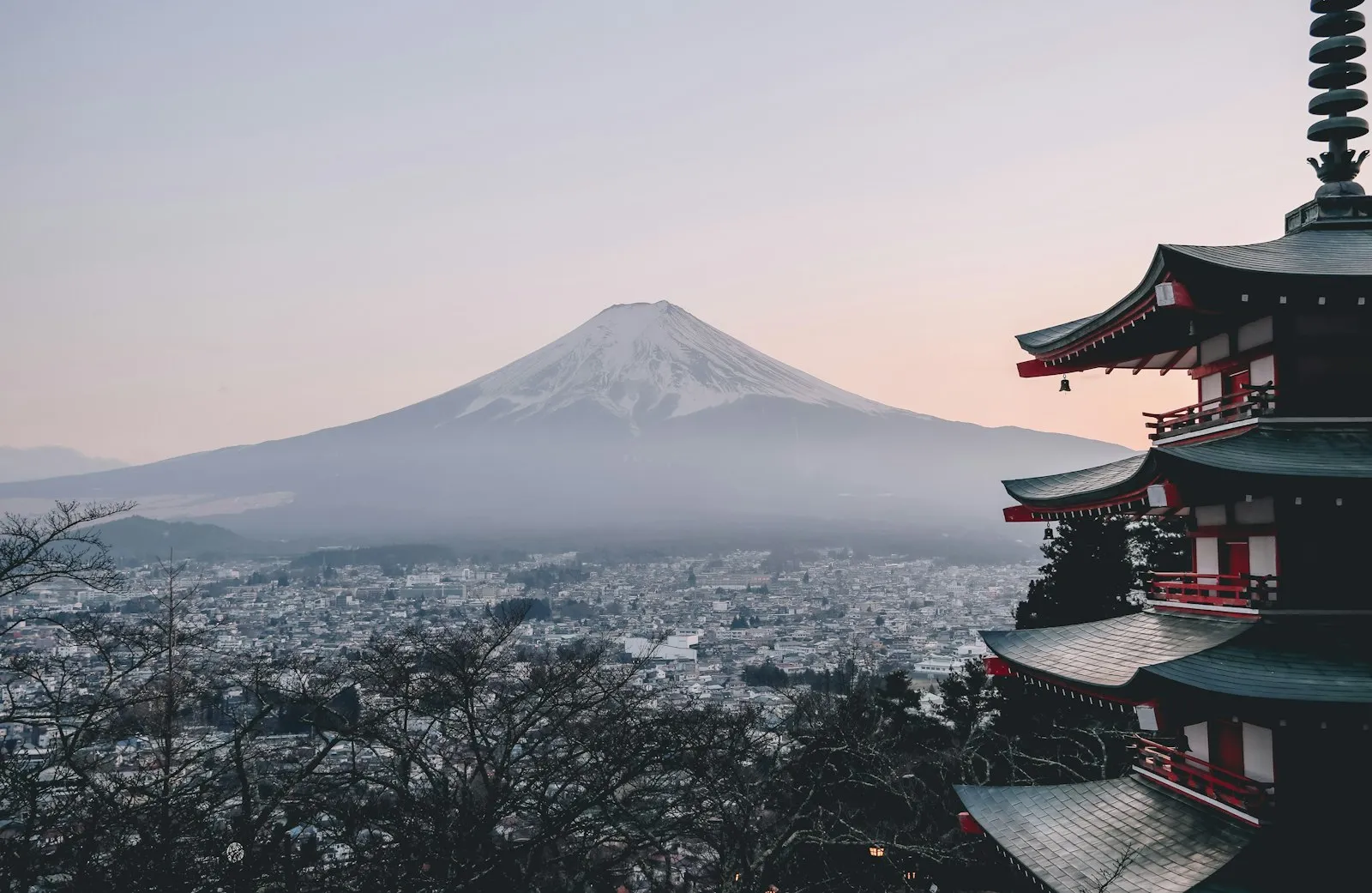
Be honest about Fuji. The mountain is an active stratovolcano of 3,776 metres, about 100 km south-west of Tokyo and visible from the city on clear days, and it was added to the UNESCO list as a cultural site on 22 June 2013, with 25 sites of cultural interest recognised around it. It is snow-capped for about five months of the year, with the seasonal cap appearing around 2 October on average. Seeing it up close is a full day and the summit is a climb with a season, not a day trip; most visitors get the view from Hakone or from the train instead. Book nothing on the weather, and keep the day flexible.
Goodbars sells a Japan eSIM you install at home and switch on when you land; it runs on NTT docomo, Japan's largest mobile network by mobile contracts, and our Japan coverage page shows where it reaches and what independent speed tests measure.