Six alleys, two hundred rooms
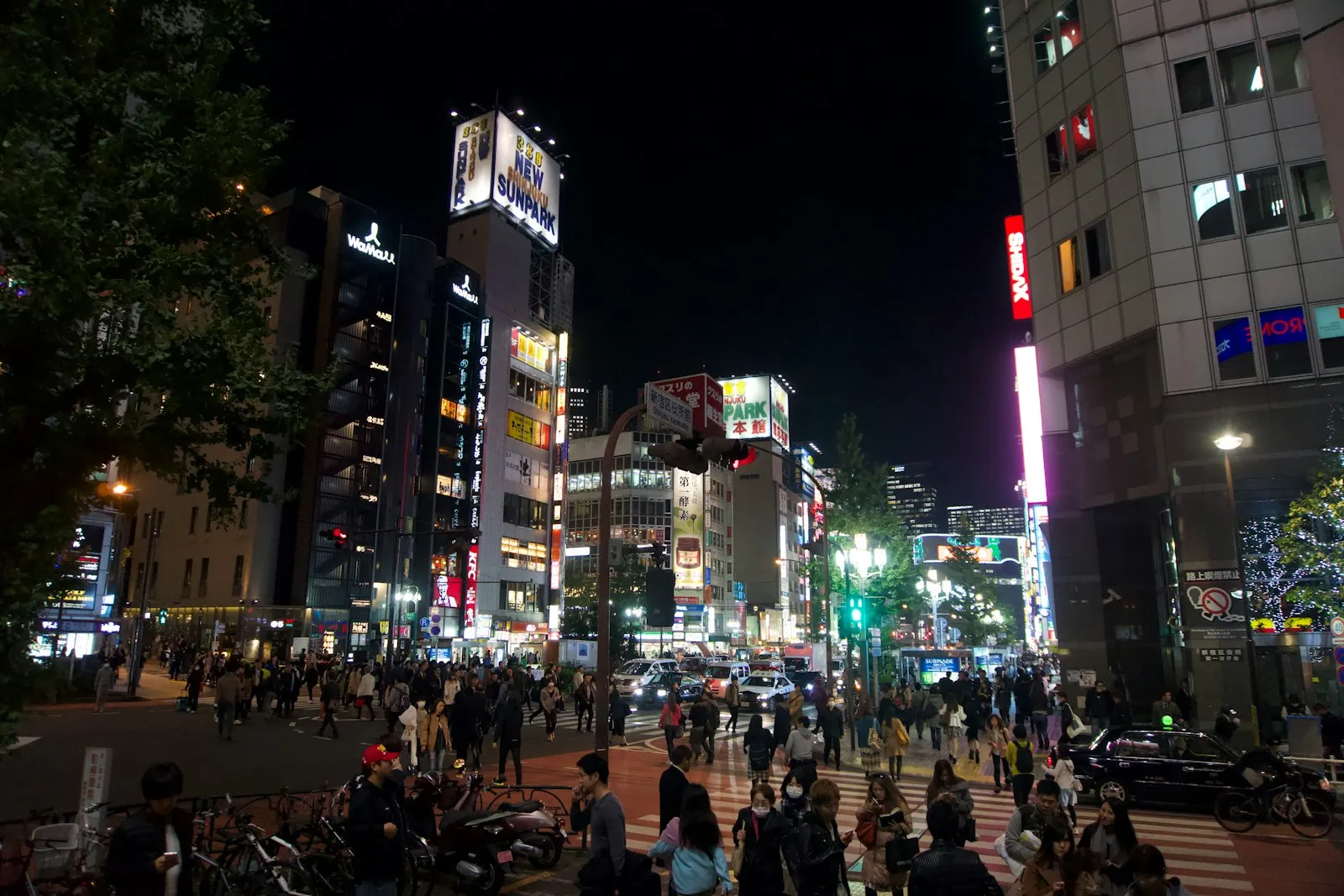
Shinjuku Golden Gai is a district of Kabukicho inside Shinjuku ward, made of six narrow alleys connected by passages about wide enough for a single person to pass through. More than 200 tiny shanty-style bars, clubs and eateries are squeezed into that space. Most of them do not open until nine or ten at night, which is why the area is quiet during the day and early evening and looks like a film set at midnight. At least some of the bars trace their origins to the 1960s, and the district survived the 1980s, when buildings around Tokyo were being burned so developers could buy the land, because its supporters took turns guarding it at night. It is one of a decreasing number of places that show what Tokyo looked like before the economic miracle.
How a six-seat bar works
These are rooms, not venues, and the room is the product. A bar here may hold six or eight people at a counter, often up a stairway you would not climb in any other city, with one person behind it who is the owner, the barman and the conversation. That shapes the etiquette. You have one or two drinks and move on, rather than settling in for the night and blocking a third of the seats. Many places charge for the seat as well as for what you drink, which is normal here and is not a scam, but it is also the thing visitors get caught by, so ask what the charge is or look for a priced menu before you sit down. Some bars are for regulars, some have a theme, some have a sign in English and some do not want one; a closed door is an answer, not a challenge.
The photography rule, and whose street this is
The alleys of Golden Gai are private roads, not public ones, and that changes what you are allowed to do in them. Shooting photographs and video on the street, for any purpose, is prohibited without permission from the area's business promotion association. That is the single rule most visitors break, usually within a minute of arriving, and it is not a tourist-board suggestion: it is the position of the people whose front doors you are standing between. Put the phone away in the lanes, ask inside a bar before you photograph anything or anyone, and accept no as the answer. The place looks the way it does because people have defended it for decades, and the least you can do is not treat it as a backdrop.
Kabukicho, and the line you do not cross
Golden Gai sits inside Kabukicho, and Kabukicho is where the UK FCDO's warnings are aimed. The police list it, along with Roppongi, Shibuya and Ikebukuro, as a high-risk zone at night. Most British victims say they were approached in English by street touts, kyakuhiki, who encourage people into an establishment by misrepresenting what is on offer. The FCDO is blunt about it: do not follow street touts into bars, and do not go in on the promise of a free drink or to have a look, because you may not be free to leave. The pattern that follows is drink spiking and card fraud, with victims waking with no memory and sums from hundreds to tens of thousands of pounds billed to their cards. Disputes over excessive bar bills have ended with British nationals arrested. See a menu with prices before you enter anywhere, confirm any admission charge on the way in, keep track of what you order, do not accept a drink from a stranger or leave yours unattended, and carry only what you need that night.
Street rules, and the last train
Two local rules catch visitors out before anything else does. Smoking on the street is illegal in Tokyo and in some other cities, so you smoke in the marked areas rather than walking along with a cigarette. Drinking in public is generally legal, with local exceptions on certain days, including New Year's Eve bans in some areas. Volume is the third rule, unwritten: the person who gets loud is the one everybody notices, and that includes on the train home. Which brings up the timing. Check the last departure on your line before the evening starts, because after it there is no real night network and you are choosing between a taxi and staying out until the trains restart. Shinjuku Nichome is the city's known LGBT+ district, next door to all of this.
Signal in the alleys
The station has the best signal you will get all evening, so use it. Our carrier lists 5G standalone in service at the east exit of Shinjuku Station as of 31 May 2026, and it has said it is raising network capacity around the main stations, Shinjuku among them. What it also says, plainly, is that the higher 5G bands penetrate buildings worse than 4G, that service can fail inside buildings, underground and on high floors, and that a 5G icon on your screen does not mean you are using 5G. Golden Gai is two-storey rooms up narrow staircases, which is exactly the case its warnings describe.
So save the address, screenshot the map and download anything you will need before you walk into the lanes. Goodbars sells a Japan eSIM you install at home and switch on when you land; it runs on NTT docomo, Japan's largest mobile network by mobile contracts, and our Japan coverage page shows where it reaches and what independent speed tests measure.