
Komodo Island
On the map
There is no mobile coverage inside Komodo National Park. You are offline from the moment the boat leaves Labuan Bajo harbour, and no eSIM changes that.
What Komodo Island is
Komodo is the largest island in Komodo National Park and the one that gives the dragons, the park and the whole trip their name. It is a big, dry landmass of savannah grass, thorn scrub and steep brown hills, protected since 1980 and inscribed by UNESCO, with a small fishing village on one coast and a ranger station where visitor boats land. The island is a long way from Labuan Bajo compared with the park's other stops, so most people reach it on a longer day trip or an overnight boat itinerary.
Walking with a ranger
You cannot walk on Komodo without a park ranger, and that is not a formality you can talk your way around. Rangers meet every group at the station and lead short, medium or long loop trails out across the savannah and back, with the long loop climbing a hill for a view over the bay. They carry a forked stick, they set the distance you keep, and they decide when the group moves. Stay together, do not walk ahead for a better angle, and tell your ranger before you set off if you have an open cut, because dragons track scent.
The dragons themselves
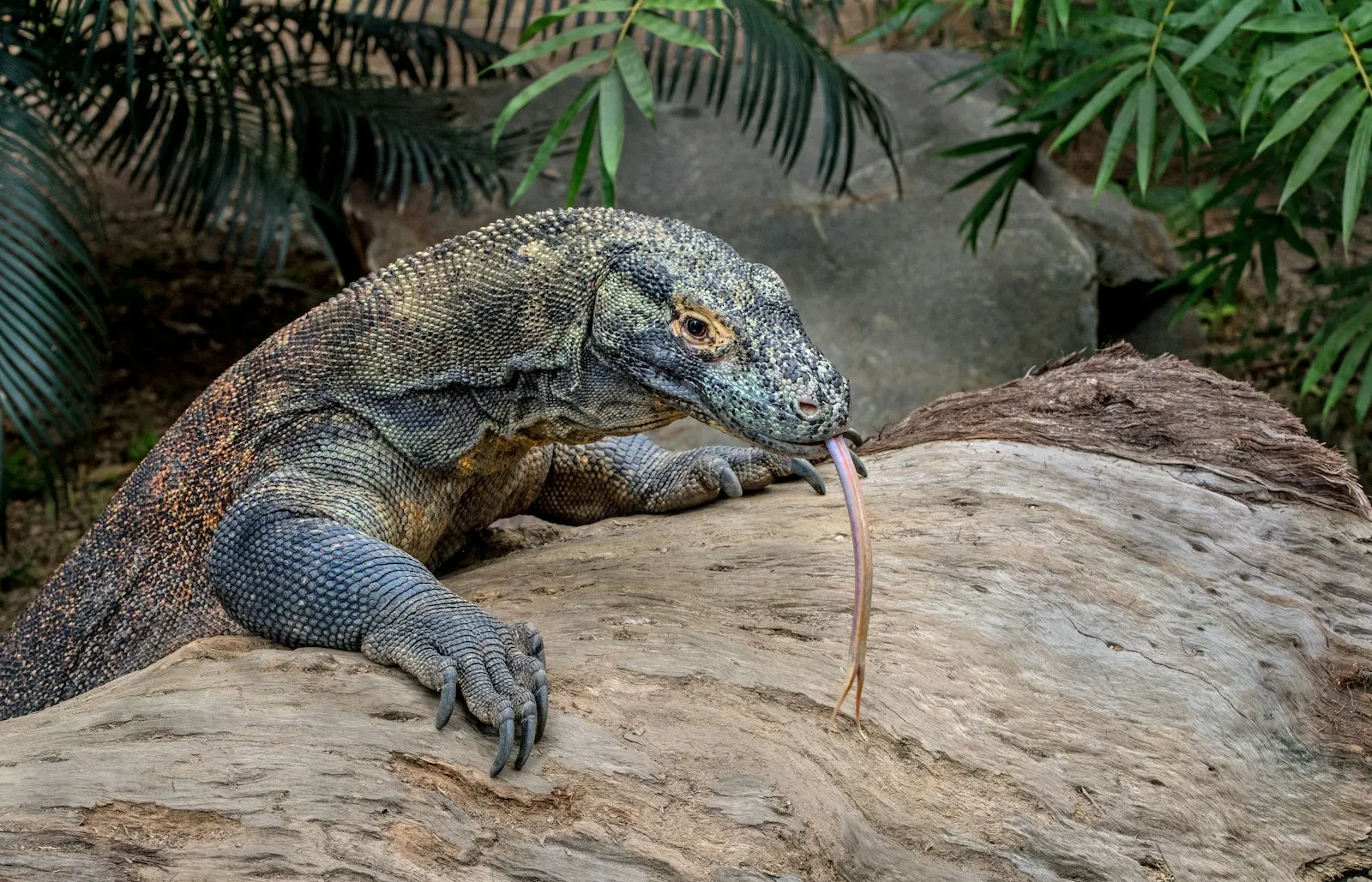
Komodo dragons are the largest living lizards, with big males commonly around two and a half to three metres long, and they are dangerous wild animals rather than a photo prop. They are venomous, they are fast over short distances, they swim, and they are least predictable around food. Most of the time you will see one lying still in the shade doing nothing at all, which makes it easy to forget the rest. Sightings are likely but never guaranteed: they are wild, they move where the shade and the prey are, and midday heat flattens their activity.
What else lives on the island
The island is a working ecosystem rather than a dragon enclosure, and the other animals are part of what makes the walk worth doing. Timor deer are the dragons' main prey and are the animal you are most likely to see moving; wild boar, water buffalo and long-tailed macaques all use the same trails and water holes. Ground-nesting birds build large mounds of scraped earth and leaf litter that rangers point out along the way. Away from the paths, the savannah is genuinely dry country, and the walk feels much more like African grassland than anything else in Indonesia.
Getting there, fees and timing
Komodo is reached only by boat from Labuan Bajo, and the crossing is long enough that it is usually the far end of a full-day or multi-day itinerary rather than a quick hop. Sea conditions decide whether the day runs at all. Park entry and ranger charges apply, and those charges have been raised, withdrawn and restructured repeatedly, with reporting describing a daily visitor cap and online pre-booking through the park's official system. No second-hand figure is safe. Confirm the current amounts and what your boat covers in writing, and check them against official park channels close to your date.
Phone signal on Komodo Island
There is none, and the honest version is that you are offline from the moment the boat leaves Labuan Bajo harbour. Goodbars runs on Telkomsel, which reaches further across Indonesia than any other network, and its value here is being connected in town rather than out in the park. As of July 2026 there is no usable coverage inside Komodo National Park, on the crossing or on the trails, and no eSIM changes that. Plan around it: download offline maps, send anything that matters before you sail, and tell whoever is waiting on you that you are uncontactable until the boat is back in the bay.
Common questions
Can you see Komodo dragons on Komodo Island?
Yes, that is what the island is visited for, but sightings are likely rather than guaranteed. They are wild animals that move with the shade and the prey, and they are least active in the midday heat.
Do you need a ranger to walk on Komodo Island?
Yes, and it is mandatory rather than recommended. Rangers meet every group at the station, lead short, medium or long trails, set the distance you keep from any dragon and decide when the group moves on.
Are Komodo dragons dangerous to humans?
Treat them as dangerous. They are venomous, fast over short distances, strong swimmers and unpredictable around food. Attacks are rare, and the rules rangers enforce are the reason they stay rare.
How big do Komodo dragons get?
Big males commonly reach around two and a half to three metres and are the largest living lizards. Most animals you see will be lying still in the shade, which makes their size easy to underestimate.
Do you have to pay to visit Komodo Island?
Yes. Park entry and ranger charges apply, and the amounts have been raised, cancelled and restructured more than once. Confirm the current figures through official park channels and get in writing what your boat trip covers.
Is there phone signal on Komodo Island?
No. There is no usable coverage anywhere inside Komodo National Park, including the crossing from Labuan Bajo, and no eSIM changes that. Download maps and send your messages before the boat leaves harbour.

Out exploring?NEVER LOST
Maps, rides and bookings that just work, all over the island. Plans from €13.99.
See the plans- No ID needed
- No contract
- Instant email delivery
- Works on arrival