
The short answer
An EU or Turkish passport gets you into Japan visa-free for up to 90 days as a temporary visitor. Visit Japan Web, run by the Digital Agency, files your immigration and customs declarations online in advance and gives you QR codes to scan at the desk. Every foreign visitor is photographed and fingerprinted on arrival. Once you are through, carry your passport every day, because the police can arrest you if you cannot show your status. And check your medicine cabinet before you pack: some ordinary prescription and over-the-counter drugs are illegal to bring in. And when you leave, the International Tourist Tax, collected by the airline with your fare, has been ¥3,000 per departure since 1 July 2026, up from ¥1,000.
Ninety days, visa-free, on both passports
Japan's visa exemption list covers EU passports and Turkish passports alike: up to 90 days, as a temporary visitor. Temporary visitor is the status you are given, and it covers tourism, visiting people and business meetings, not paid work. The Ministry of Foreign Affairs publishes the list itself, and that page is the one to check against your own passport rather than a forum post, because the terms are set nationality by nationality.
Ninety days is the ceiling on one stay. What a border officer may ask for is ordinary: a return or onward ticket, the address of your first nights, and the means to pay for the trip. Japan had a record 42.7 million visitors in 2025, so the arrivals hall is busy and a short, clear answer keeps the queue moving.
Visit Japan Web: what it does, and why it is worth doing
Visit Japan Web is the Digital Agency's service for doing your arrival procedures online: immigration, customs and, once you are in the country, tax-free shopping. It files your immigration and customs declarations in advance and turns them into QR codes, which you show on your phone or tablet at the desk. You register, enter your passport and trip details, and scan the codes at the airport instead of writing on paper in the queue.
The desk itself photographs you and takes your fingerprints, as it does for every foreign visitor, and that part cannot be done in advance. So do the web forms the evening before you fly, screenshot the QR codes so they survive a dead connection, and expect to stand in front of a camera anyway. Japan also plans an electronic travel authorisation, JESTA: the immigration authorities aim to introduce it in fiscal year 2028, so for now there is nothing to apply for.
Your passport in your pocket, and what is in your washbag
Carry your passport with you, every day, not in the hotel safe. Japanese police can stop you and ask to see your status, and if you cannot show it they can arrest you. That is the FCDO's wording rather than a scare story, and the same advice explains why the stakes are higher than a telling-off: you can be detained without charge for up to 23 days, even over a minor offence.
The other thing to settle before you pack is your medicine cabinet. Some common prescription and over-the-counter medicines are illegal to bring into Japan because of ingredients treated as stimulants. Check your own prescriptions and cold remedies against the official guidance before you fly, not at the customs bench.
Landing at Narita, and getting online
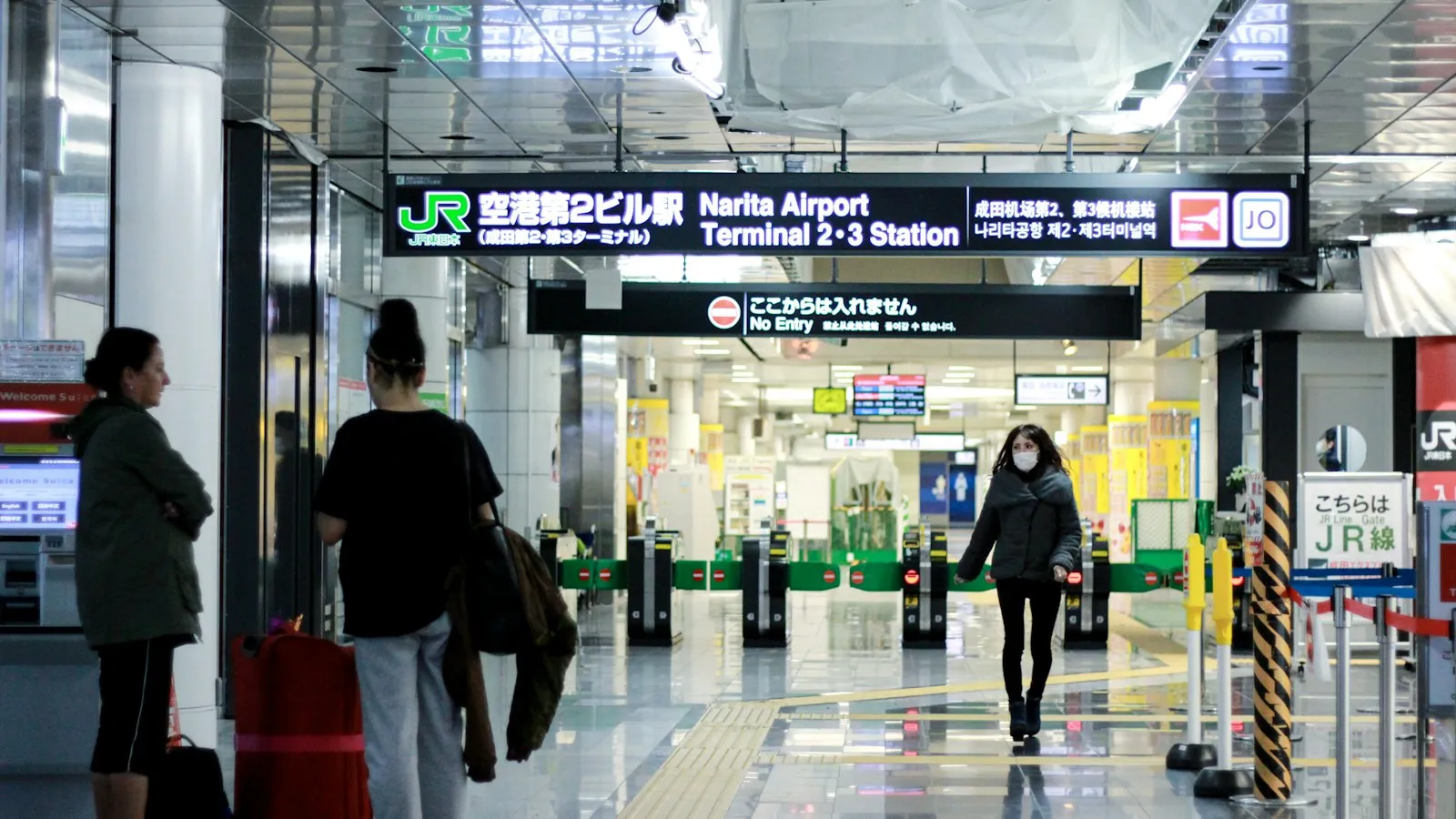
Narita sits about 60 km east of Tokyo, so arrival is not over when you clear the desk. The JR Narita Express takes about an hour to Tokyo Station, and the Keisei Skyliner about forty minutes to Ueno. Both leave from under the terminals and both are easy to buy on the spot, so pick by where you sleep, not by speed.
Sort your connection before any of that. Goodbars sells a Japan eSIM you install at home and switch on when you land; it runs on NTT docomo, Japan's largest mobile network by mobile contracts, and our Japan coverage page shows where it reaches and what independent speed tests measure. Install it while you still have wi-fi at home, leave it switched off, and turn it on once the doors open, so your map, your hotel address and your QR codes all work while you are still in the hall.