

Meiji Shrine
On the map
A shrine for an emperor
Meiji Shrine, Meiji Jingū in Japanese, is the Shinto shrine dedicated to the deified spirits of Emperor Meiji and his wife, Empress Shōken. It is a place of worship rather than a tomb: the emperor's grave is at Fushimi-momoyama, south of Kyoto. Construction began in 1915 under Itō Chūta, in the traditional nagare-zukuri style and mostly in Japanese cypress and copper, and until 1946 it stood in the first rank of government-supported shrines. The buildings you see today were paid for by public fundraising and completed in October 1958.
The forest
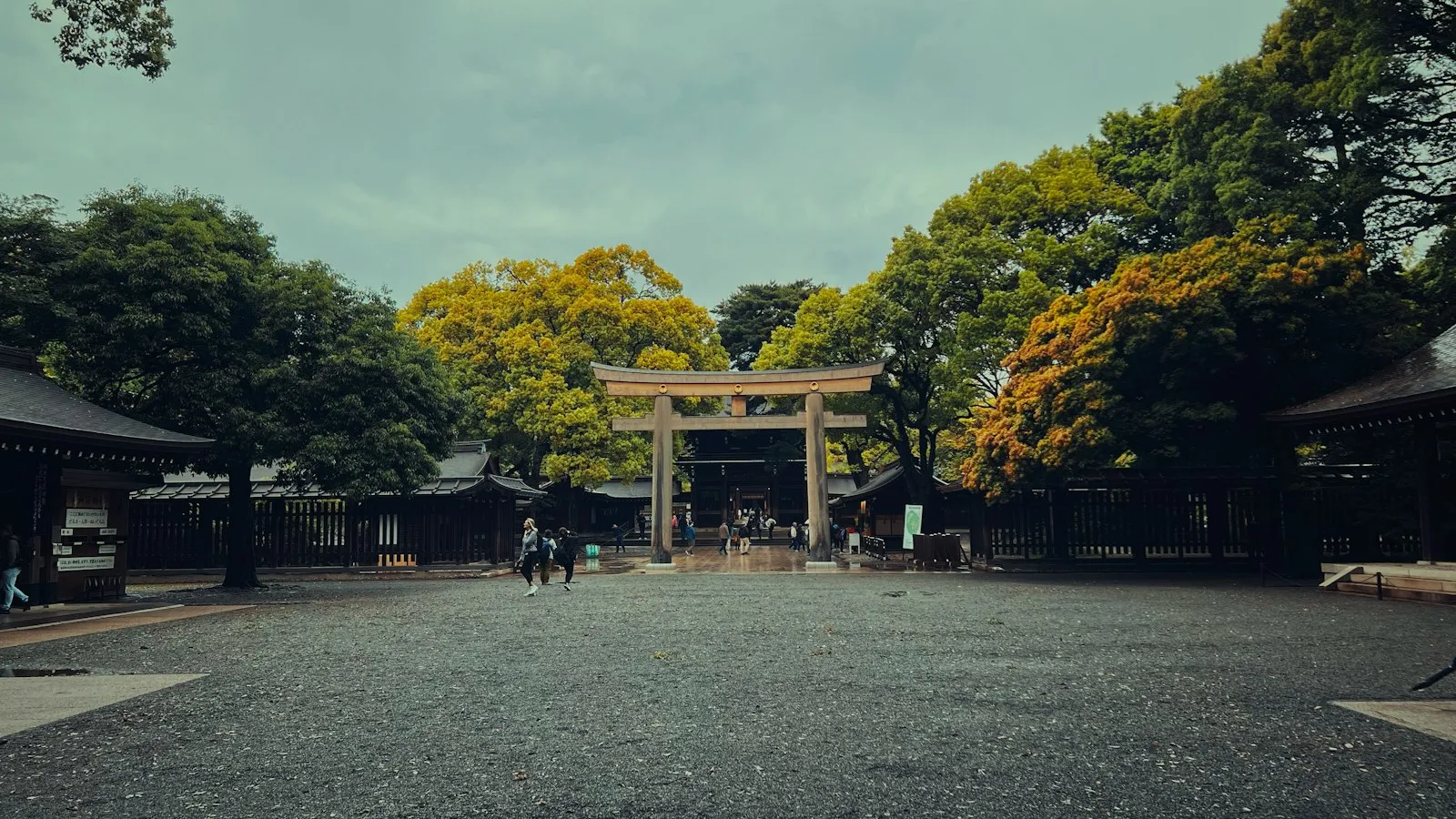
What surprises people is the forest. The shrine sits inside 70 hectares of evergreen woodland in Shibuya, made up of 120,000 trees of 365 species that were donated by people from every part of Japan when the shrine was established. Bow at the torii and the city noise falls away as the gravel avenue takes you under the trees; by the time you reach the main buildings, it is hard to believe the scramble crossing is so close. That is why the shrine works best as the first thing you do in the morning, before the rest of Tokyo gets going.
Shrine manners and the calendar
This is an active shrine, so the usual manners apply. Bow once as you pass under a torii, rinse your hands at the stone basin, and at the offering box drop a coin in, then two bows, two claps and one bow. Keep your voice down near the main hall, and do not photograph worshippers or a ceremony without asking. The calendar matters too: in January, usually around the 5th to the 7th, and again at the Autumn Festival, a yokozuna performs the ring-entering ceremony here. New Year is when shrines take their biggest visits of the year, so plan for crowds if you come then.
Getting there and staying connected
The shrine is in Shibuya, a short walk from Harajuku and the boutiques of Omotesando; check the nearest station in a transit app, and a Suica or Pasmo IC card covers the ride. Many shrines are free to walk into, unlike most temple halls; check the shrine's own notices for gate times and any charges before you plan an early start. Come early, walk the forest, then do what the Tokyo itineraries do: Harajuku and Omotesando on foot, the Shibuya scramble, and Shinjuku after dark. Goodbars sells a Japan eSIM you install at home and switch on when you land; it runs on NTT docomo, Japan's largest mobile network by mobile contracts, and our Japan coverage page shows where it reaches and what independent speed tests measure.
Common questions
Is Meiji Shrine free to visit?
Many shrines are free to walk into, while temple halls usually charge. For Meiji Shrine, check the shrine's own notices for gate times and any charges before you go.
Who is Meiji Shrine dedicated to?
To the deified spirits of Emperor Meiji and Empress Shōken. It is a shrine, not a tomb: the emperor's grave is at Fushimi-momoyama, south of Kyoto.
How big is the Meiji Shrine forest?
It covers 70 hectares and holds 120,000 trees of 365 species, all donated by people from every part of Japan when the shrine was established.
Will my phone work at Meiji Shrine?
The shrine is in Shibuya, in the city rather than somewhere remote; keep the phone on silent near the main hall, where people are praying. Goodbars sells a Japan eSIM you install at home and switch on when you land; it runs on NTT docomo, Japan's largest mobile network by mobile contracts, and our Japan coverage page shows where it reaches and what independent speed tests measure.

Install before landingLAND ONLINE
Set up your eSIM at home and step off the plane already connected. No counter, no passport handed over, no queue.
See the plans- No ID needed
- No contract
- Instant email delivery
- Works on arrival