Pick the hour you want, then the district
In Kyoto the question is not which district is nicest, it is which hour you want to own. The famous sites are calm before nine and solid by eleven, so sleeping next to one buys you an empty lane and everything else follows from that. The city was the capital from 794 to 1868 and holds roughly 2,000 temples and shrines on a flat, readable grid you can cross by bicycle, which keeps every area within reach of every other. One number applies wherever you book: Kyoto City has charged a revised accommodation tax since 1 March 2026, ¥200 under ¥6,000 per person per night, ¥400 from ¥6,000, ¥1,000 from ¥20,000, ¥4,000 from ¥50,000 and ¥10,000 at ¥100,000 or more.
Higashiyama and Gion: the eastern hills
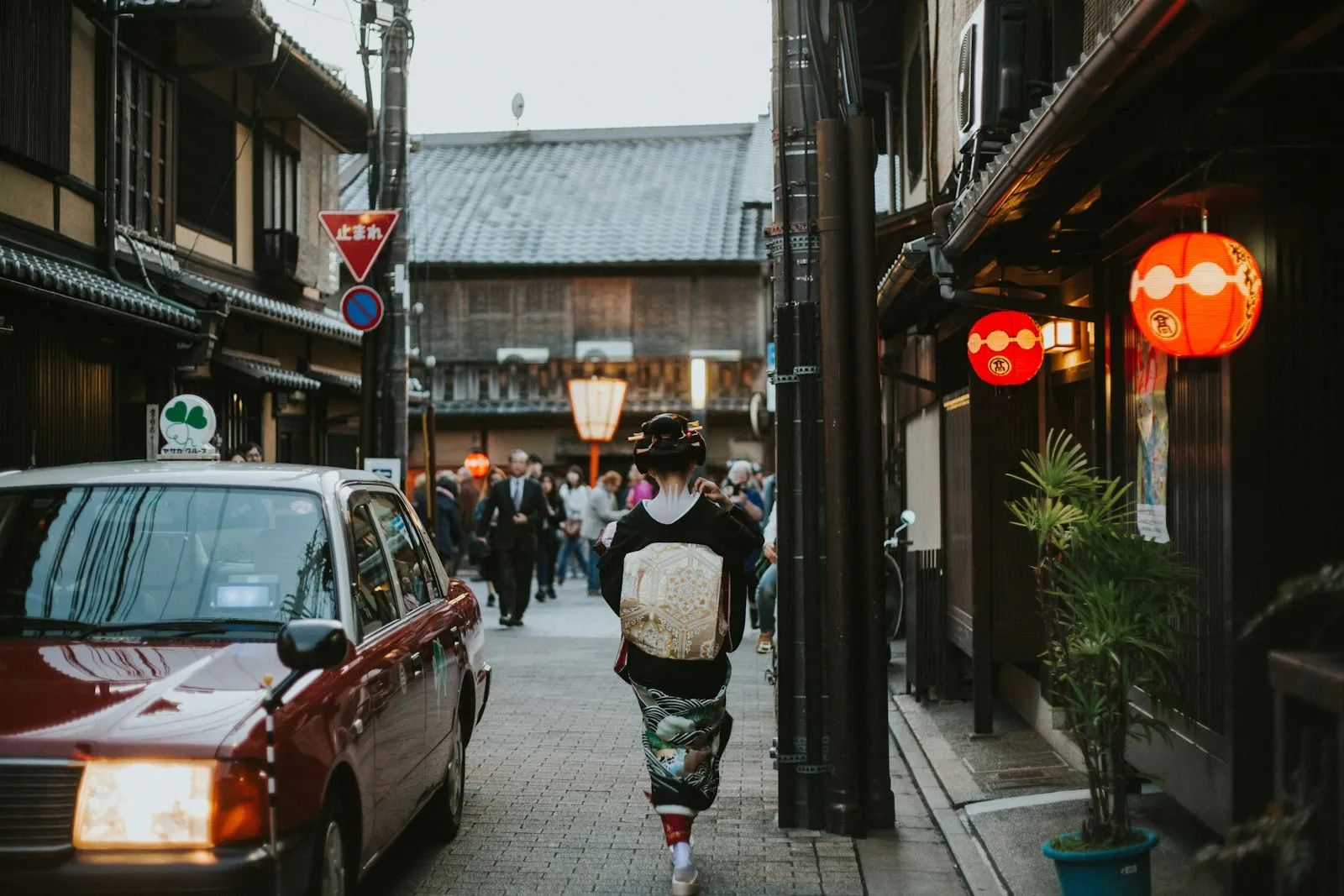
This is the Kyoto on the covers: old streets climbing towards Kiyomizu-dera, and Gion below them. Gion is a district of Higashiyama-ku that grew up in front of Yasaka Shrine in the Sengoku period to serve travellers and became the best known geisha district in the country; in Kyoto the word is geiko, and the dances run from 1 to 30 April. Sleeping here buys you the lanes before the buses arrive, and it costs you convenience: this side of the city is not where the subway goes, and the evening is quiet by Japanese standards. Remember that these are working streets and private houses, so no photographs of people who have not agreed to them.
Kyoto Station: the base for train days
Kyoto Station is the hub and the practical answer. The shinkansen from Tokyo arrives here in around 2.5 hours, the Haruka limited express comes in from Kansai International Airport in about 1 hour 20 minutes, Osaka is fifteen minutes away and Nara, Uji and Himeji all start from this building. Hotels are plentiful and the rooms are business rooms, which is another way of saying you get a lift, a luggage rack and no atmosphere. Take it if your days are day trips, if you arrive late or leave early, or if you are travelling with heavy bags. The temples are twenty minutes away by bus, and the bus is the part you will complain about.
Downtown: Kawaramachi and Nishiki
Downtown is where you eat, and it is the compromise most people should make. Nishiki Market runs about 400 metres along Nishikikoji Street between Takakura and Teramachi, roughly 130 shops under a covered arcade, and the restaurants and bars spread out from there towards the river. You are on the subway here, the buses to the temples start nearby, and Gion is a walk across the water rather than a taxi. The trade is noise and the fact that your morning starts with a bus ride instead of a lane. For a first visit with two or three nights, this is the safe choice.
Arashiyama and the quieter west
Arashiyama sits on the western outskirts, a district and the mountain across the Oi River behind it, together a nationally designated historic site and place of scenic beauty. Staying here is a deliberate choice: the day-trippers leave in the late afternoon and you get the river, the light and the bamboo grove at an hour when the photographs are possible. The cost is distance. You are away from the subway, the evening options are limited, and every trip into the centre is a planned journey rather than a walk. It suits a second visit, a longer stay or anyone who wants Kyoto to be quiet after dark.
The one ryokan night, and staying online
Book one night in a ryokan and a hotel for the rest. A ryokan is a traditional inn with tatami rooms, communal baths and shared spaces, a form that goes back to the eighth century; they are harder to find in big cities, where they tend to cost more than modern hotels, and they are most common in hot-spring areas. The rhythm is the point and it is also the catch: dinner is served at a set time, so a ryokan night ends your sightseeing early. Many baths do not admit guests with tattoos, and a private bath is the usual way round that; ask when you book.
Goodbars sells a Japan eSIM you install at home and switch on when you land; it runs on NTT docomo, Japan's largest mobile network by mobile contracts, and our Japan coverage page shows where it reaches and what independent speed tests measure. Whatever connection your room turns out to have, it stops at the door, and Kyoto is a city of bus timetables.