


How to choose your Bali beach
The right beach in Bali depends on the coast, not the resort: white sand and cliffs in the south, dark surf sand in the west, calm water in the east. The sand colour is geology rather than upkeep. The Bukit peninsula is limestone, so its coves are pale; the west coast's grey-black sand washed down from the volcanoes. Decide what your day is for (swimming, surfing or sunset) and pick the coast to match, because crossing between coasts through southern traffic can take well over an hour each way.
Bukit peninsula: the white-sand coves
The Bukit has Bali's best sand, and you earn most of it with stairs. Padang Padang Beach is a small cove entered through a cleft in the rock, lovely and packed by mid-morning, with monkeys working the steps (entry about IDR 15,000 as of July 2026). Bingin Beach keeps its famous surf, but its cliffside warungs were demolished in July 2025 and rebuilding has barely begun, so the scene is rawer than older photos suggest. Melasti Beach is the easy one, with a road cut down the cliff face, while Nyang Nyang Beach stays quiet because the only way in is a long, shadeless walk down.
West coast: surf, sunsets and two honest caveats
Canggu and Seminyak are for surfing and sunsets, not postcard swimming. Beginners learn on the forgiving beach breaks at Batu Bolong Beach and Berawa Beach, and Seminyak Beach lines its wide grey sand with sunset bars. Two things the brochures skip: rip currents are strong and only a few stretches are patrolled, and in the wet season (roughly December to March) ocean currents dump plastic onto this coast, cleared most mornings and back with the next tide. Come at golden hour and you will still love it.
East coast calm: Sanur and Nusa Dua
For easy swimming, head east. Sanur Beach sits behind a reef, so the water stays calm and family-friendly, with a paved beachfront path running for kilometres; the trade-off is that low tide turns it ankle-deep, so time your swim for higher water. Nusa Dua Beach is the groomed resort strip, calm and clean, with public access points so you do not need a resort wristband to use it. The east is a morning coast: it faces the sunrise, and light, tide and wind are all better before noon.
Kelingking and the Nusa Penida day trip
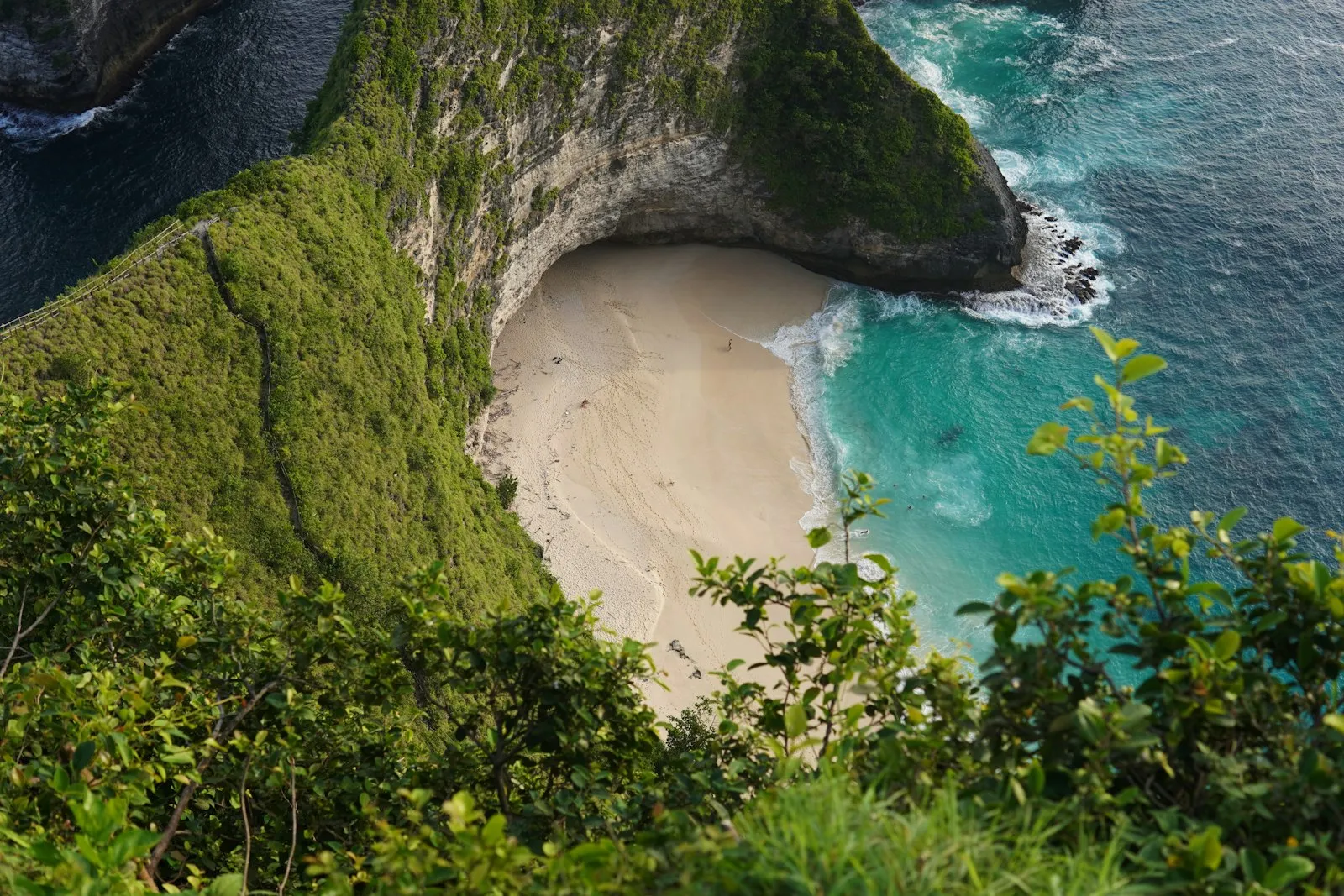
Kelingking is a viewpoint first; the beach itself is hard-won. The clifftop view of the T-Rex headland at Kelingking Beach justifies the fast-boat trip on its own. Be realistic about the descent: a steep, exposed dirt-and-bamboo scramble of 30 to 60 minutes each way, and swimming below is banned after multiple drownings. The half-built cliff lift was halted by the authorities in late 2025 and sits unfinished. Pay the entry fee (around IDR 25,000) only at the official booth. For water you can actually get into, Crystal Bay on the same island is the better stop.
Fees, safety and staying online
Carry small cash, because most southern beaches charge something. As of July 2026, expect entry or parking fees of roughly IDR 3,000 to 25,000 per beach, collected at booths on the access roads. Assume there are no lifeguards unless you can see a flagged, patrolled stretch: Kuta and parts of Seminyak have them, most Bukit coves do not. Tide apps, Nusa Penida boat tickets and drivers all run through your phone here, and coastal signal is strong, so a Bali eSIM set up before you land covers the whole coast-hopping routine.