


Tegallalang Rice Terraces
On the map
Signal is decent at the roadside viewpoints but patchy down on the terrace paths, so save an offline map before you descend.
The terraces north of Ubud
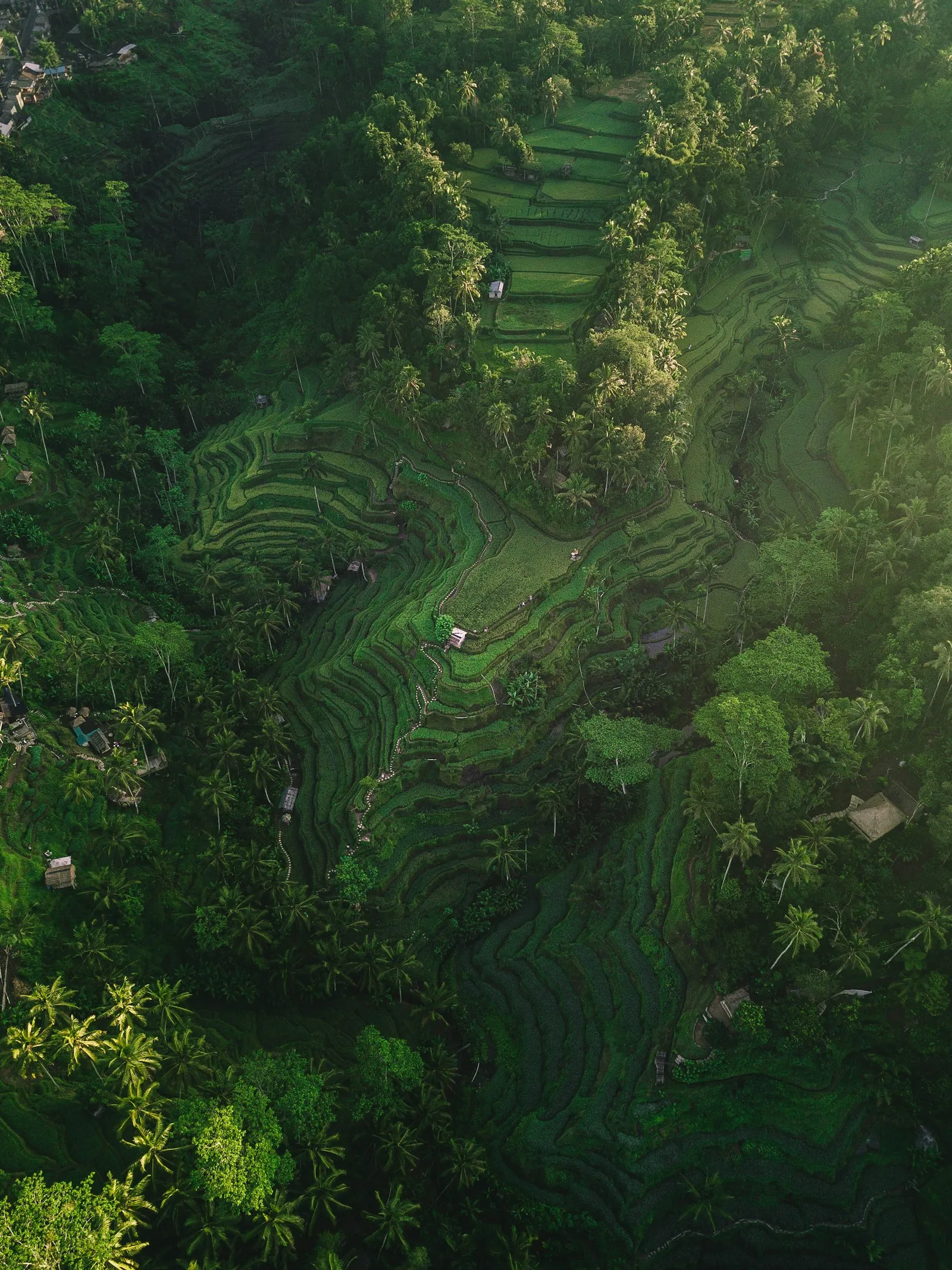
Tegallalang is a valley of stepped, actively farmed rice paddies about twenty minutes north of Ubud, carved into the hillside and watered by subak, the centuries-old cooperative irrigation tradition that UNESCO has recognised as part of Bali's cultural landscape. It is one of the island's most photographed views, and it is still a working farm, not a stage set.
Walking the valley
The walk drops steeply into the valley on long staircases, crosses little bridges and irrigation channels, then climbs back up the far side. A quick look takes twenty minutes; the full loop with stops runs one to two hours, and it is honestly sweaty work with uneven footing, worse after rain. Bring cash: there is a small entrance fee, and farmers ask small donations at crossing points along the paths, which funds the upkeep.
Swings and photo stops
The famous jungle swings, nests and photo platforms that hang over the terraces are run by independent local operators and are paid extras on top of the entrance, with prices that vary by operator and package. They are entirely optional: the terraces themselves are the show, and free to photograph once you are in.
When to go
Early morning, roughly seven to nine, is the sweet spot: cooler air, softer light, and you are ahead of the tour buses and swing queues. The paddies are typically at their greenest a few months after planting, and golden around harvest, but planting is staggered, so some terraces are always greener than others. In the wet season expect mud and slippery steps.
Getting there and staying connected
From Ubud centre it is about nine kilometres north, twenty to twenty-five minutes by scooter or car, with parking near the entrance for a small fee. Signal is reasonable at the roadside cafes and viewpoints but drops on the paths down in the valley, so load your route and offline map before you descend. Telkomsel holds up best in this rural stretch, which is the network your Goodbars eSIM runs on.
Common questions
How much does Tegallalang cost?
There is a small entrance fee plus small farmer donations requested at points along the walk, and the swings are separately priced extras. Amounts change, so carry small cash notes and check on the day.
How long do you need at Tegallalang?
A viewpoint stop takes twenty minutes; walking the full valley loop with photo stops takes one to two hours. The stairs are steep, so allow more time in the heat.
Are the Tegallalang swings worth it?
They make spectacular photos, but they are optional paid extras run by local operators, with prices that vary. The terraces themselves are the main event.
When is the best time to visit?
Early morning, around seven to nine, for cool air, soft light and few people. After rain the steps get slippery, so dry-season mornings are easiest.
Does Goodbars work at the rice terraces?
At the roadside viewpoints, generally yes; down on the terrace paths signal gets patchy. Save an offline map first. Goodbars runs on Telkomsel, the most reliable network in this rural area.



Out exploring?NEVER LOST
Maps, rides and bookings that just work, all over the island. Plans from €13.99.
See the plans- No ID needed
- No contract
- Instant email delivery
- Works on arrival