


Sekumpul: the big one
Sekumpul in Bali's north is the island's most impressive waterfall, and the only one that needs half a day. Sekumpul Waterfall is really a cluster of six or seven falls pouring off a jungle ridge. The village controls access, and as of July 2026 a viewpoint-only ticket costs about IDR 20,000, while the guided treks down to the base run roughly IDR 125,000 to 250,000 including a mandatory local guide. Yes, you have to take the guide for the trek, and yes, those are the real prices at the official booth, not a hustle.
The easy hits around Ubud
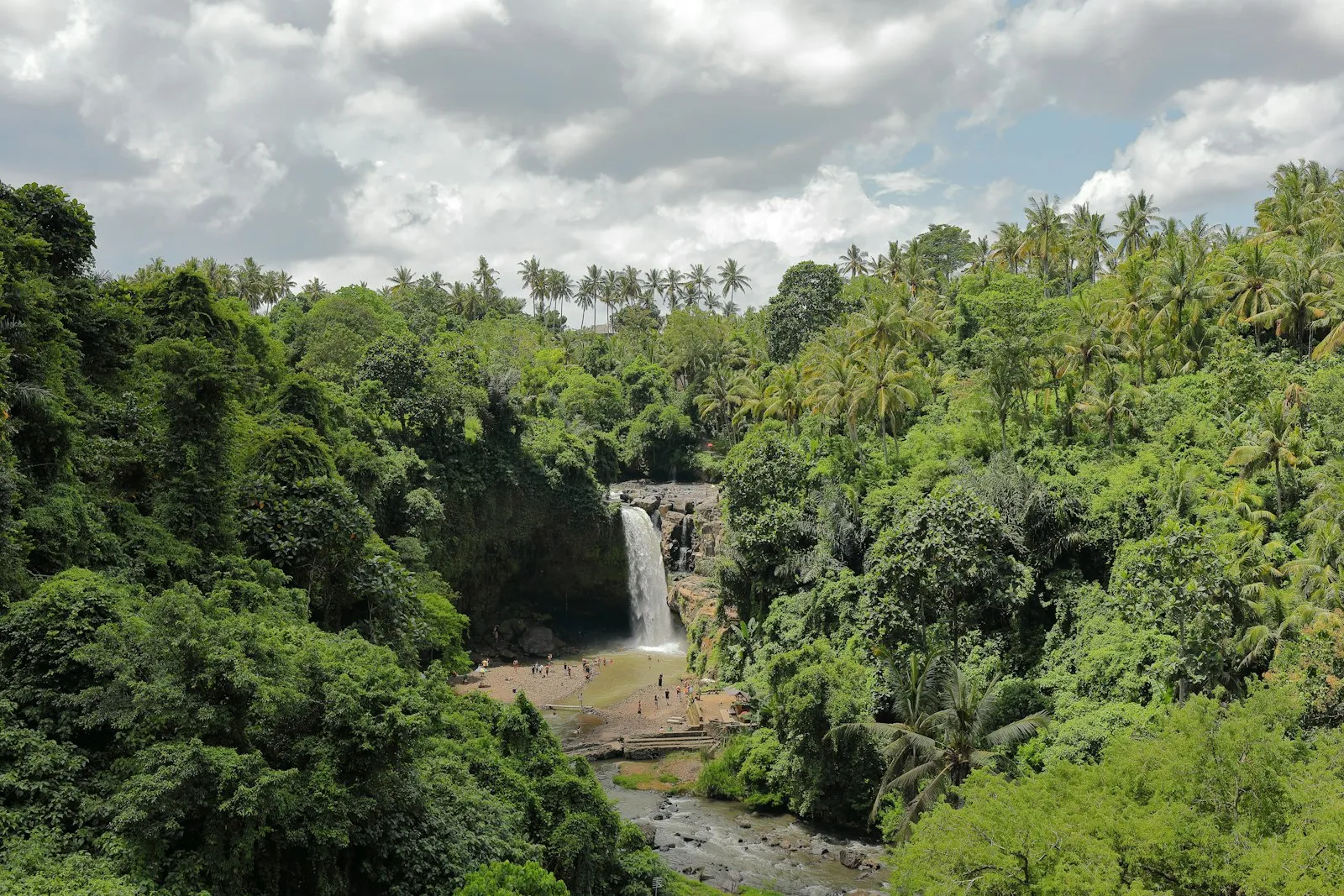
Tibumana, Kanto Lampo and Tegenungan are the low-effort classics within about 30 to 45 minutes of Ubud. Tibumana Waterfall (about IDR 25,000) is a single clean curtain with a calm pool, the best all-rounder of the three. Kanto Lampo Waterfall (around IDR 15,000 to 20,000) is a photo stop more than a swim: expect a marshalled queue for the one rock where everyone takes the same shot. Tegenungan Waterfall (about IDR 30,000) sits closest to the tourist south, which is exactly why it is the busiest.
Tukad Cepung: the cave of light
Tukad Cepung is a light show with a schedule. Tukad Cepung Waterfall (about IDR 30,000 as of July 2026) drops inside a canyon-cave, and the famous sunbeams only slice through the opening from roughly 9:00 to 11:30 on clear dry-season mornings. Outside that window, or under cloud, you get a pretty cave and wet feet (you wade upstream to reach it), not the photo. Skip it entirely after heavy rain, when the narrow canyon can flood fast.
Nungnung and Banyumala: earned on stairs
The quieter, more powerful falls make you work for them. Nungnung Waterfall (entry around IDR 10,000 to 20,000) sits below roughly 500 steep steps; the fall is a thundering single column, and the climb back up is real cardio in the humidity. Banyumala Twin Waterfalls (about IDR 30,000), up near the northern lakes, pairs a shorter but rough path with one of Bali's nicest natural swimming pools and a fraction of the southern crowds.
Wet or dry season, morning or afternoon
Go early, and aim for the shoulder months. May to September brings clear pools and reliable sunbeams, though flow thins by late dry season; December to March turns every fall into a brown torrent, impressive to look at but often unswimmable and occasionally closed for safety. April to June and October hit the balance of full flow and clear water. Morning beats afternoon everywhere: tour groups land between 10:00 and 14:00, and storms build inland most afternoons year-round.
Planning a waterfall day
Cluster your falls by region instead of collecting them across the island. The Ubud trio makes one easy morning; Nungnung pairs naturally with the Bedugul lakes; Sekumpul and Banyumala belong to a northern overnight. Roads into the valleys are narrow and signage is thin, so download offline maps before you set off: mobile signal fades in exactly the gorges where you need directions, including stretches around Sekumpul, which is where a Bali eSIM with a solid data allowance earns its keep on the drive in and out.